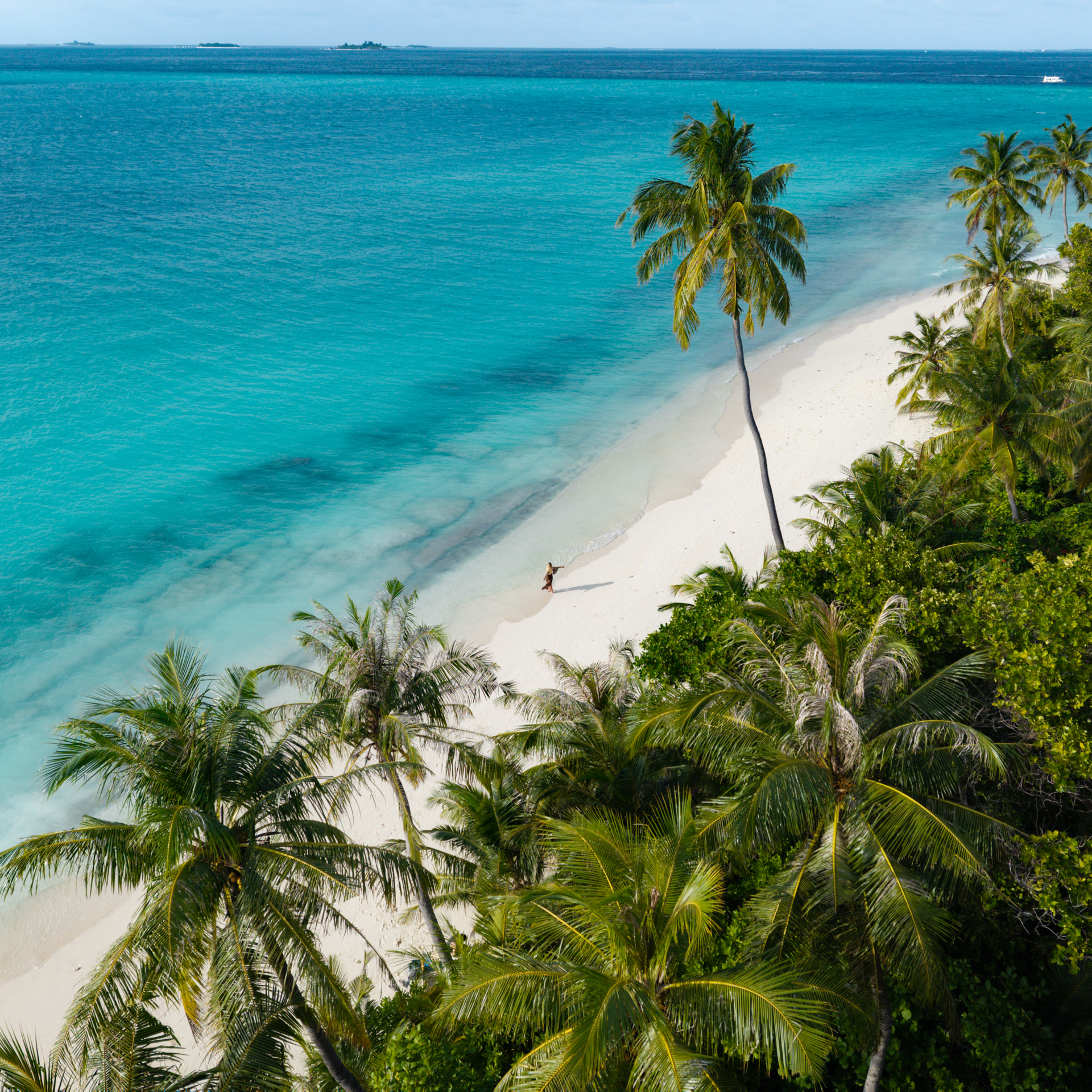
welcome-to-socotra
welcome-to-socotra

Home Socotra
THE ALIEN ISLAND

Explore Socotra

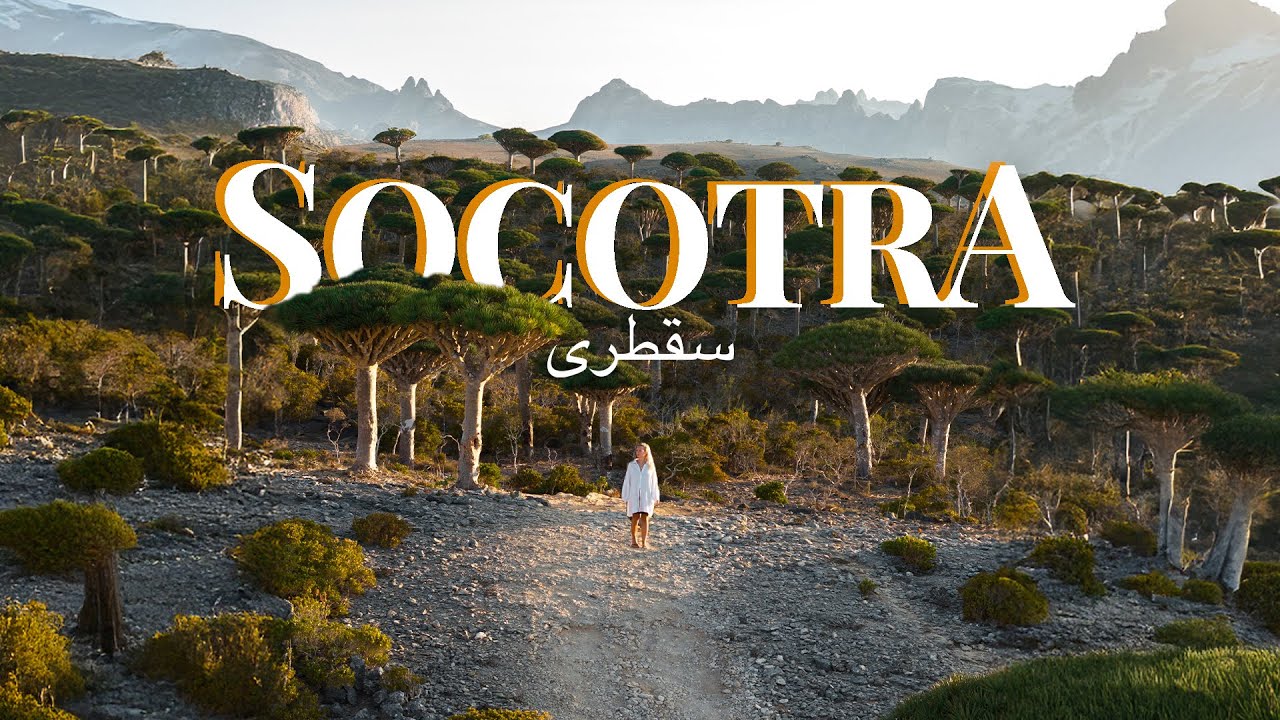
Welcome to this otherworldly island, where strange landscapes, rare plants, and untouched beaches make you feel like you’ve stepped onto another planet, the highlight of any Socotra travel experience.
Often called the “Galápagos of the Indian Ocean,” Socotra is remote, wild, and filled with natural wonders found nowhere else on Earth. The island is home to over a third of its plant species being endemic, including the iconic dragon blood tree.

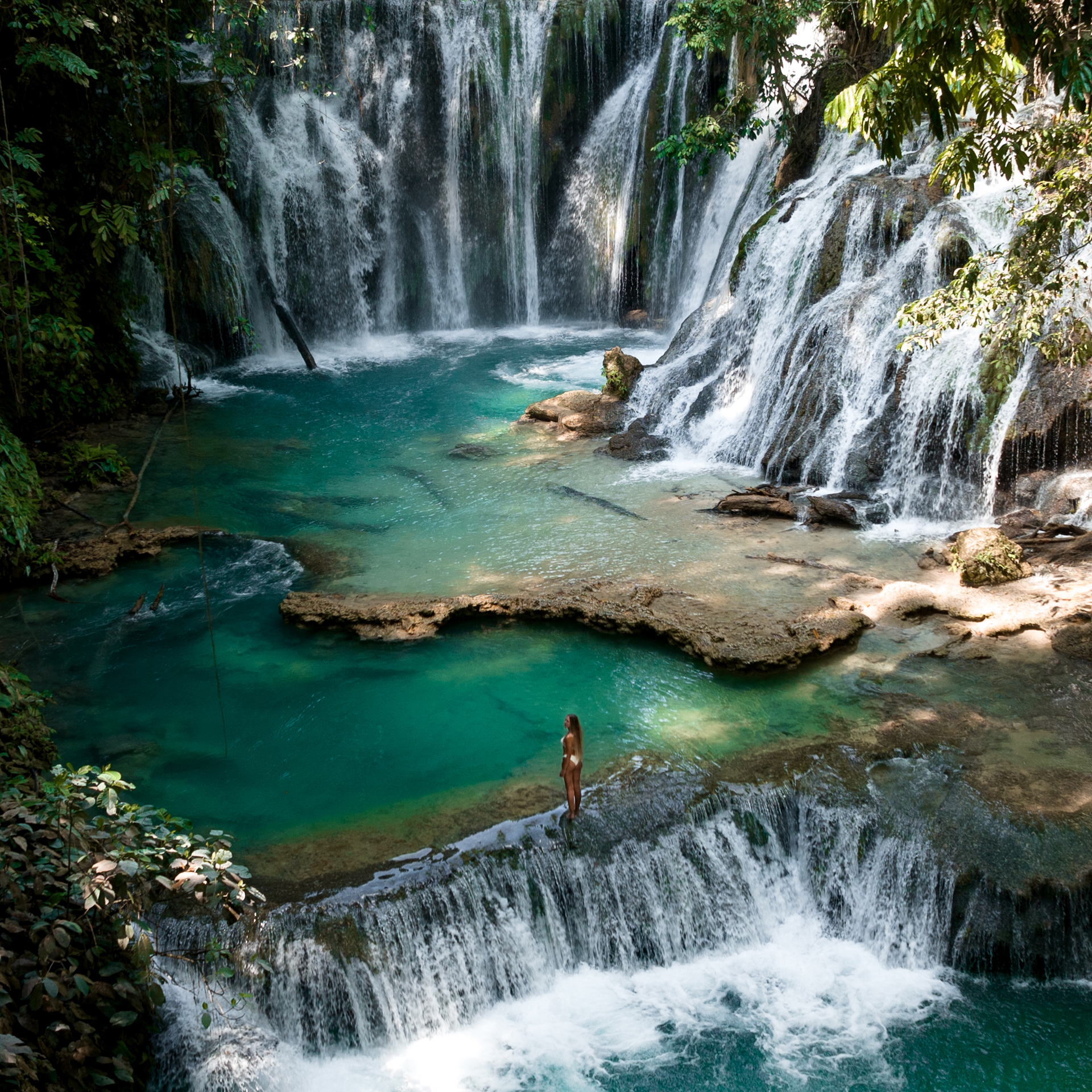
Every day here feels surreal. You might be standing under a dragon blood tree, swimming in turquoise lagoons, or hiking through canyons with views that don’t feel real. In Socotra, you don’t just explore, you witness nature in its purest, most magical form.


Hello / Greetings:

Hello in Arabic

Thank you:

Thank you in Arabic

Excuse me:

Excuse me in Arabic


THE WEATHER

Best Time to Visit Socotra

Socotra has a hot desert climate with warm temperatures year-round, usually between 24–37 °C (75–99 °F). The best time to visit depends on avoiding the strong monsoon winds. Don’t go later than mid-May, as the southwest monsoon starts to blow soon after. Tours usually stop from June to September during the monsoon season.

Dry SEASON

October – April: These months bring calmer seas, sunny days, and pleasant temperatures. Perfect for swimming, snorkeling, and exploring the island’s strange landscapes.

MONSOON SEASON

May – September: Strong winds make sea travel impossible and many areas inaccessible. Tourism is limited during these months, as the wind blows hard and the ocean currents are very strong.

Best time to visit Socotra:

the best time to visit Socotra

What month did I travel to Socotra?

I explored Socotra in early April, when the island was warm, dry, and full of color. Dragon blood trees tower over the landscape and bottle trees begin to bloom. For anyone planning to travel to Socotra, the absolute best time to go is in March or early April, when the unique bottle trees are full of pink blooms!

This post contains affiliate links, so if you choose to book through them I may earn a small commission at no extra cost to you, which helps support me and my work, thank you so much for your support!


Culture lives in every dish and every tradition

Food, Culture, and Traditions of Socotra

Culture in every flavor

Food, Culture, and Traditions

Bolivian Food

Food on Socotra is simple but flavorful. Fresh fish, rice, bread, dates, and goat meat are common staples. Meals are usually shared, and you may even be invited by locals to join them for tea or a home-cooked dish.

Stores on the island are very limited in what they offer, so make sure to bring along any personal items you’ll need. Since meals are mostly based on fish, vegetables and rice, you may also want to bring any snacks you can’t go without for a week if you tend to be strict or particular about food. The tour company will ask about your preferences, such as being vegetarian or vegan, and will take care of these needs during the trip.
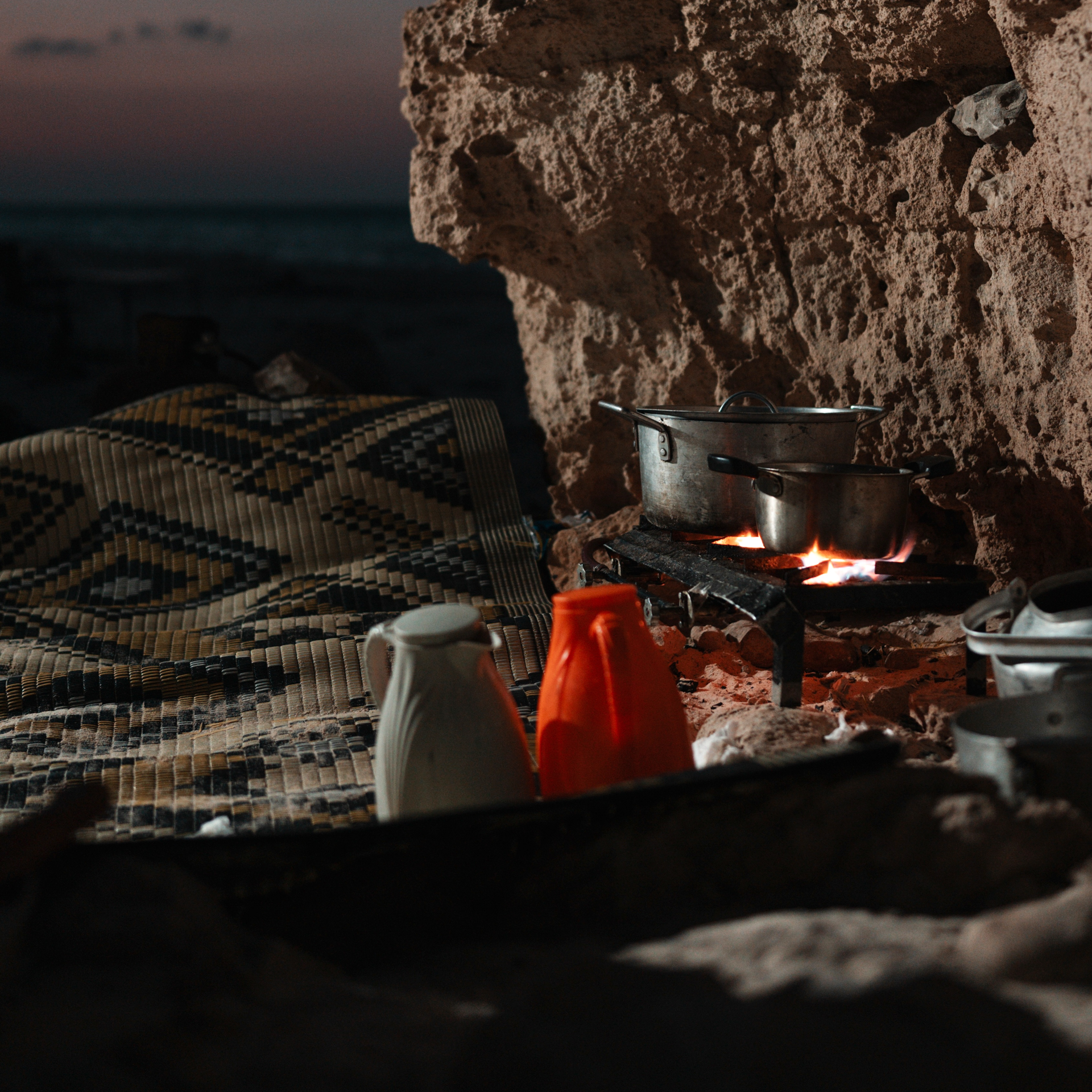
Cooking pots over an open fire in a rocky cave on Socotra, with a mat and jugs nearby at dusk.
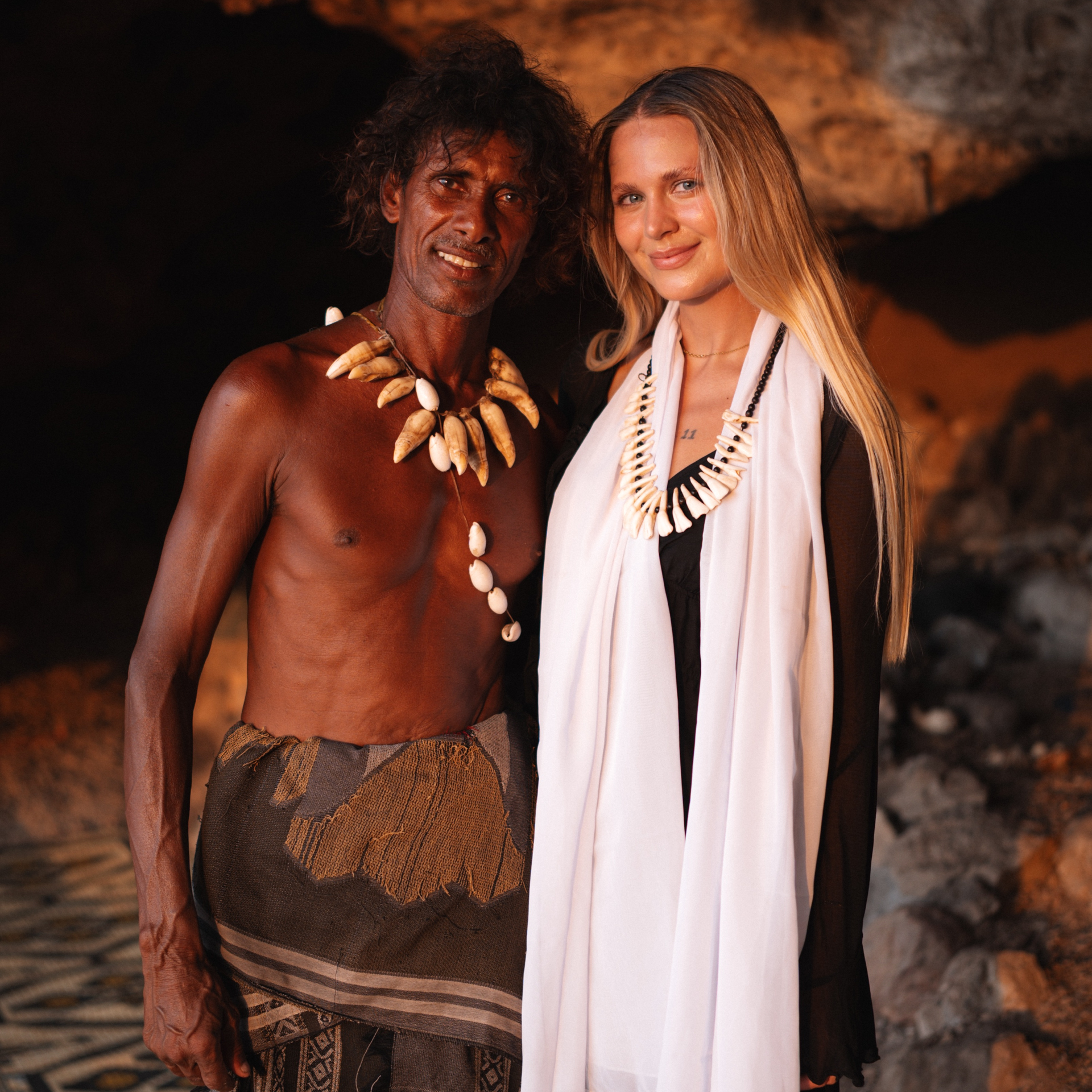
Cave man with shell necklace and tourist woman at Socotra cave during sunset.
Peruvian Culture

Socotra is part of Yemen, but it has its own unique culture shaped by isolation. The people are warm and welcoming, with traditions rooted in fishing, herding, and community life. The Socotri language is spoken here, alongside Arabic.

Women are advised to pack at least one loose-fitting dress that covers the shoulders and knees for visits to villages. Once you leave the capital, however, locals are quite used to seeing tourists in typical beachwear, so bikinis, shorts, and tank tops usually don’t attract much attention.

Bolivian Traditions

Life is slow and deeply connected to nature. Traditional songs, dances, and storytelling still play an important role in gatherings. Hospitality is a way of life, and visitors are welcomed with tea and genuine kindness.

Families often open their homes to guests. We were randomly invited to a local house to learn about dragon blood tree powder and its uses while enjoying a cup of tea. Community bonds are strong, and daily activities, from fishing to herding, are carried out together.
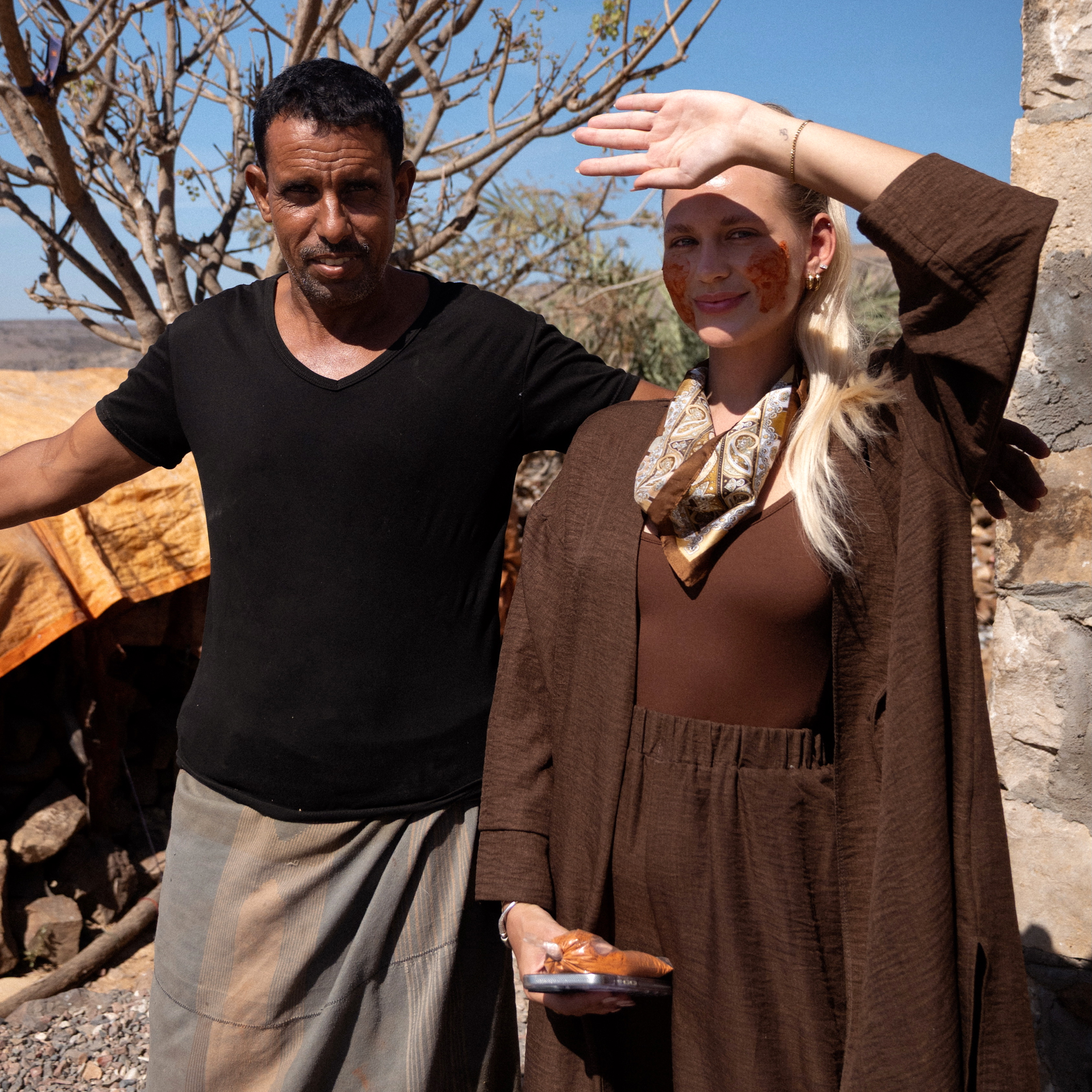
Woman with clay mask and local man in Socotra, standing outdoors under the sun.

Did you Know?

Interesting Facts About Socotra
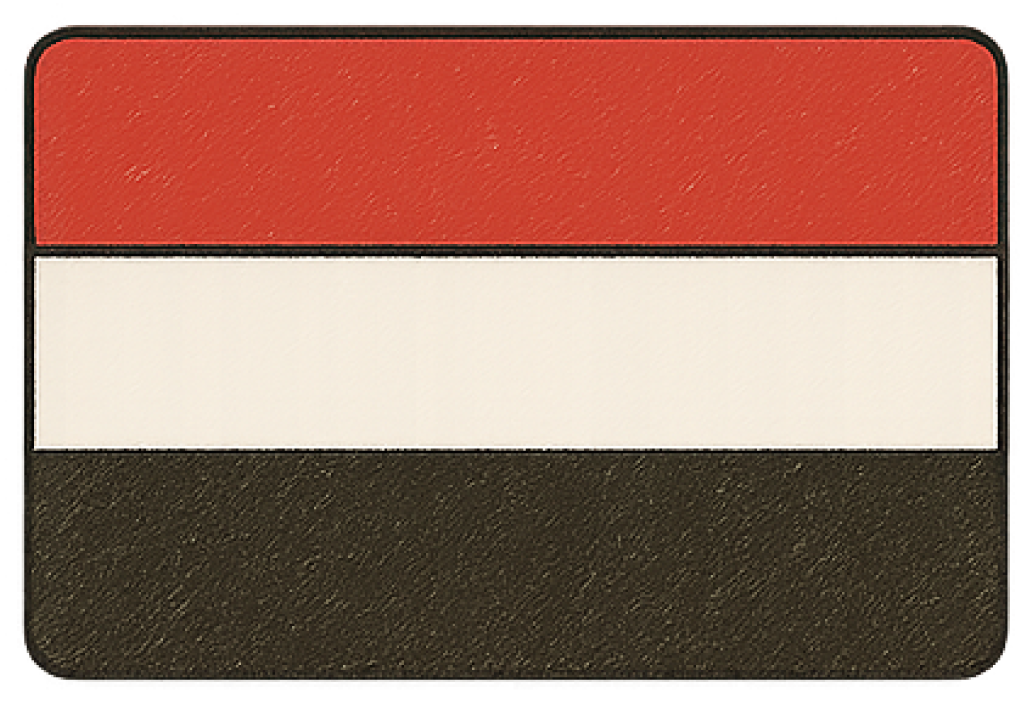
Flag of Yemen

The Meaning of Yemen’s Flag

The flag proudly symbolizes red for sacrifice, white for peace, and black for the hardships of the past. You’ll see it flying across the country, including Socotra.

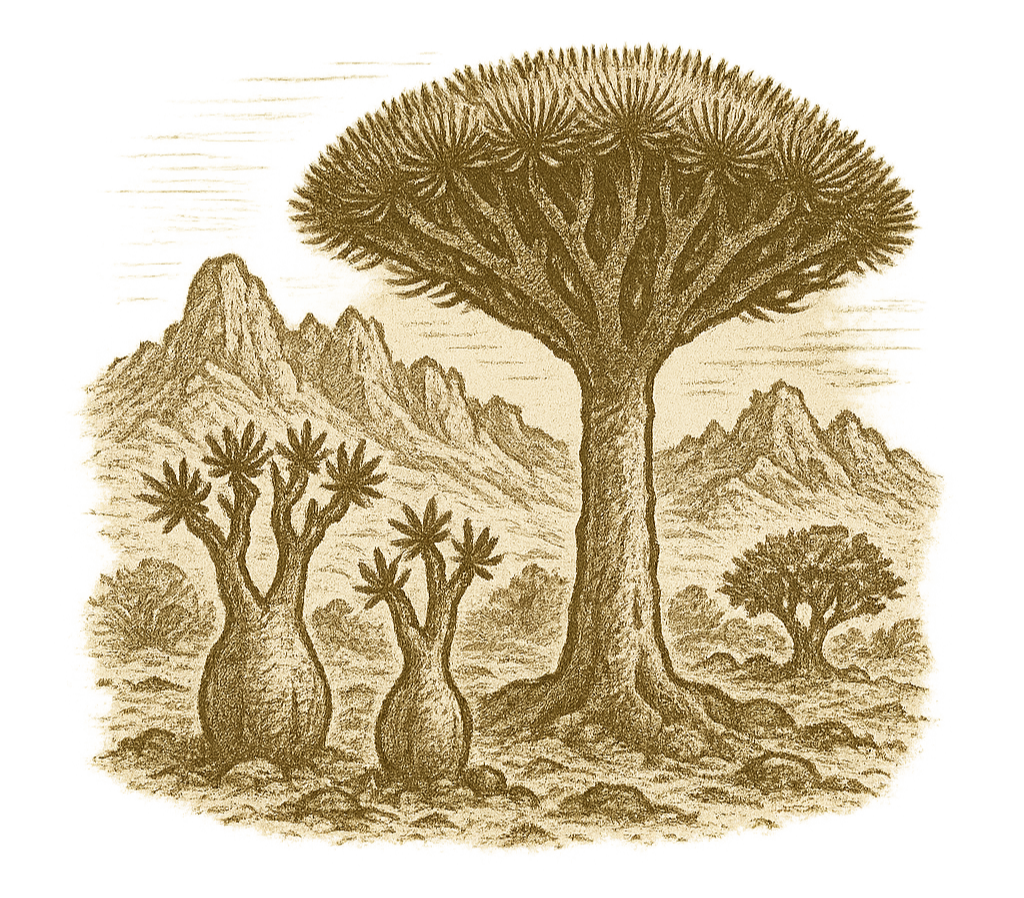
Dragon Blood Trees in Socotra

Dragon Blood Trees

These iconic umbrella-shaped trees produce a red resin once used for medicine, dye, and perfume, and today it remains one of their most famous natural symbols.
Unique ecosystem in Socotra

A Truly Unique Ecosystem

Over a third of Socotra’s plants and animals are found nowhere else on Earth, making it one of the most unique and extraordinary ecosystems in the world.

Isolated and remote Island Socotra, Yemen

Isolated Remote Location

Socotra lies in the Indian Ocean, about 350 km from Yemen, and stays untouched by mass tourism. Its isolation lets unique plants and animals flourish, many found nowhere else.


How each place feels so different

Best Places to Visit in Socotra


How each place feels so different

Best Places to Visit in Socotra


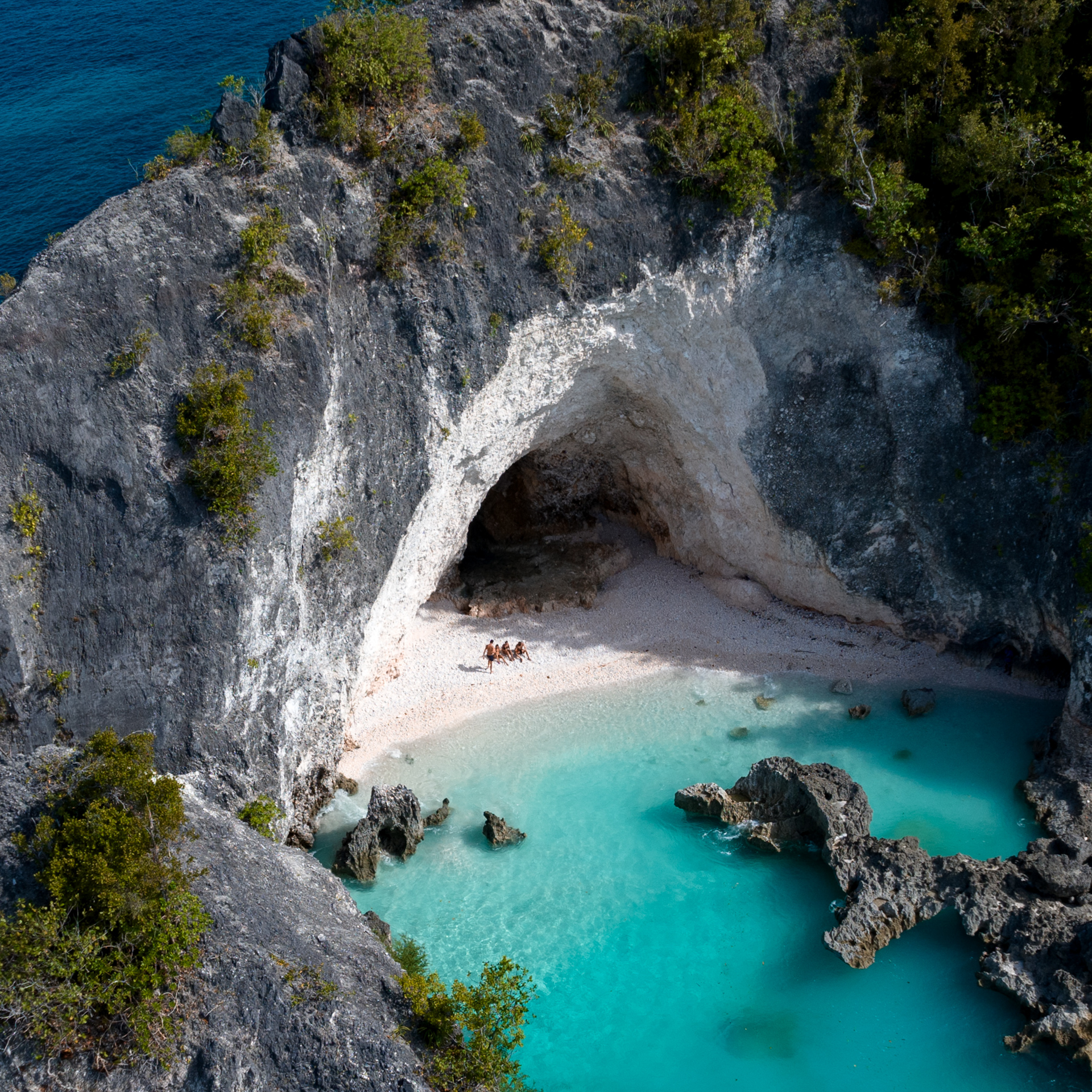
Detwah Lagoon

A turquoise lagoon framed by soft white sand and high cliffs, ideal for swimming and known for its birdlife and local fishing culture.
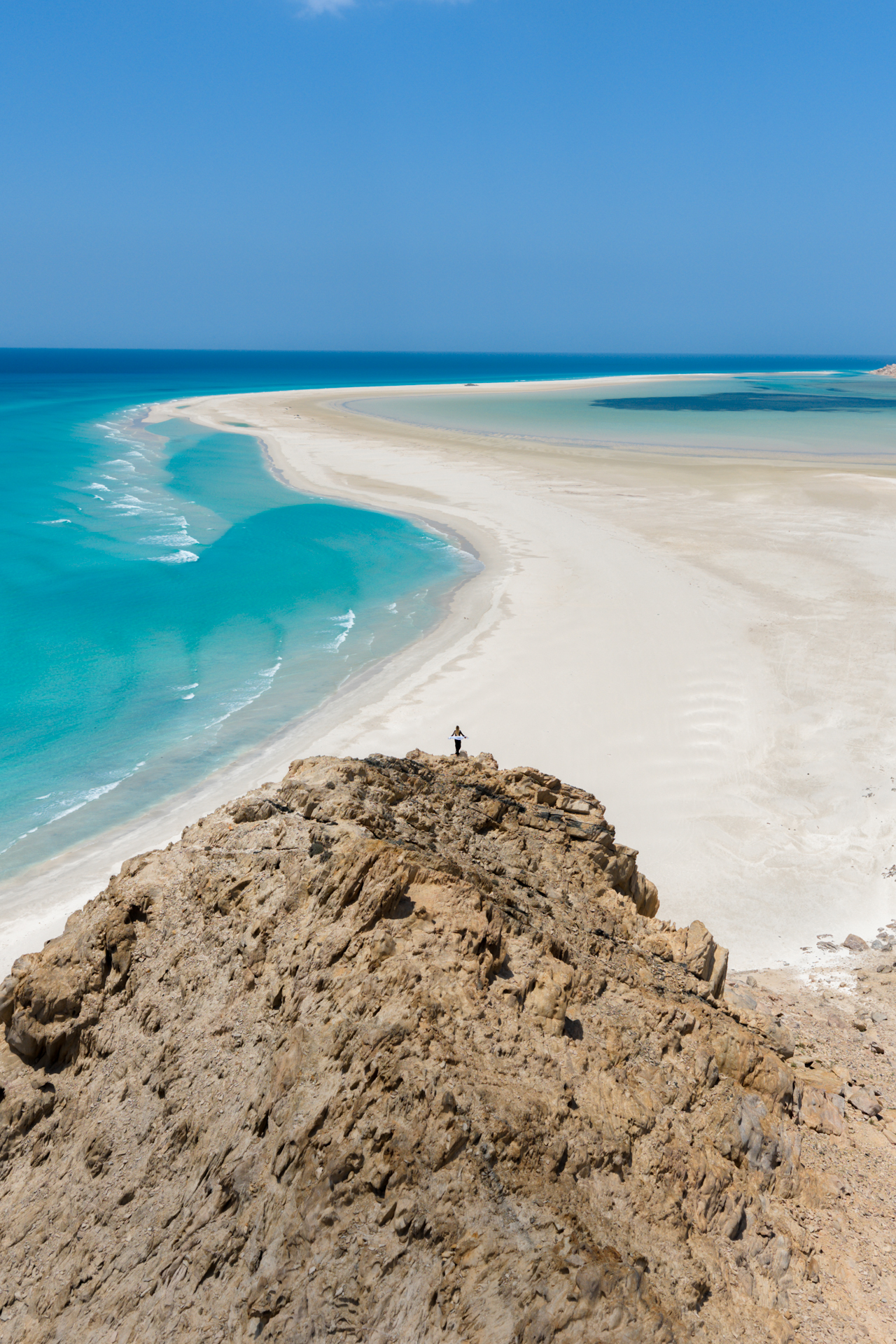
Panoramic view of Detwah Lagoon with turquoise water on Socotra Island.

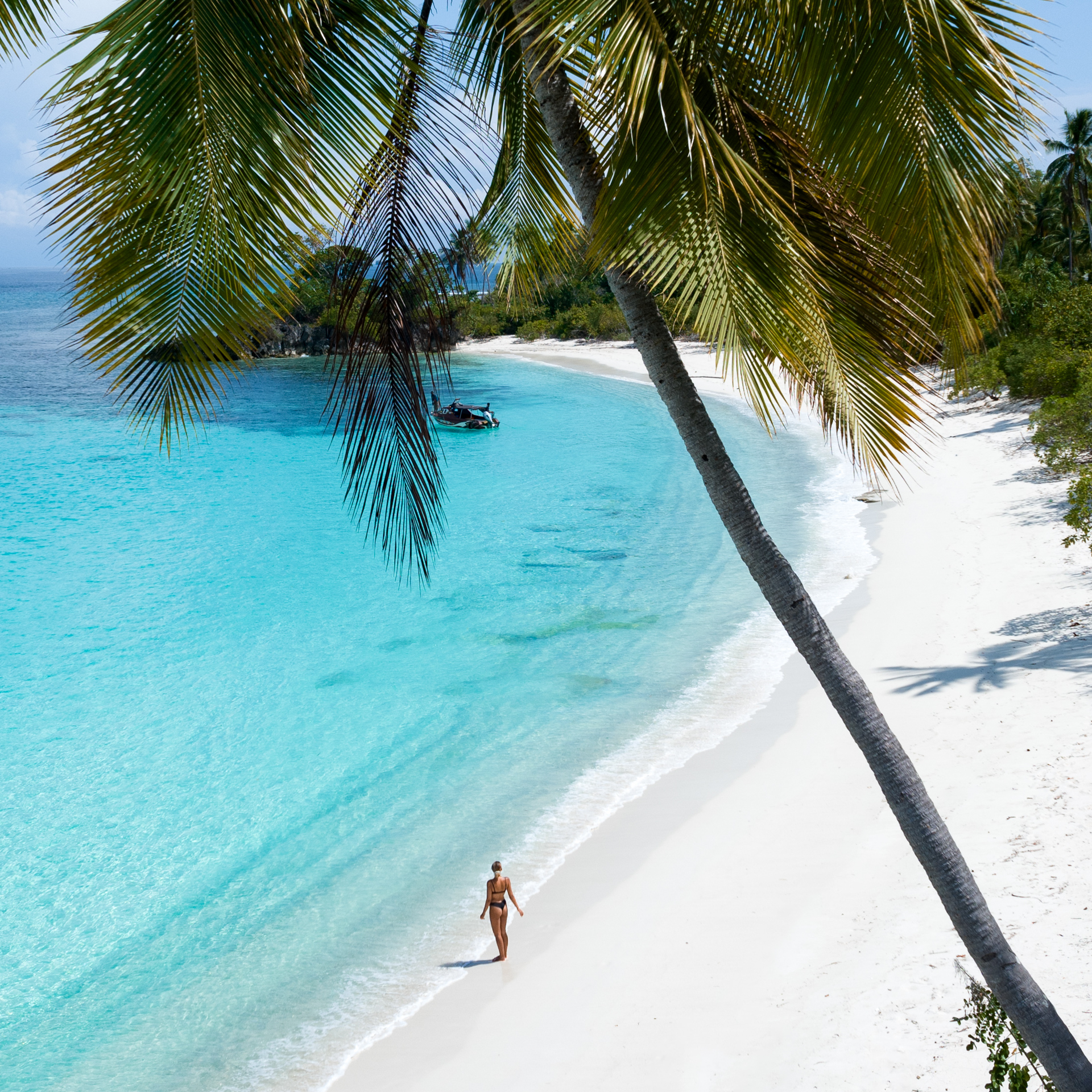
Shoab coast

A remote stretch of golden sand and clear waters, perfect for a boat trip to relax and swim, with dolphins often spotted along the shoreline.
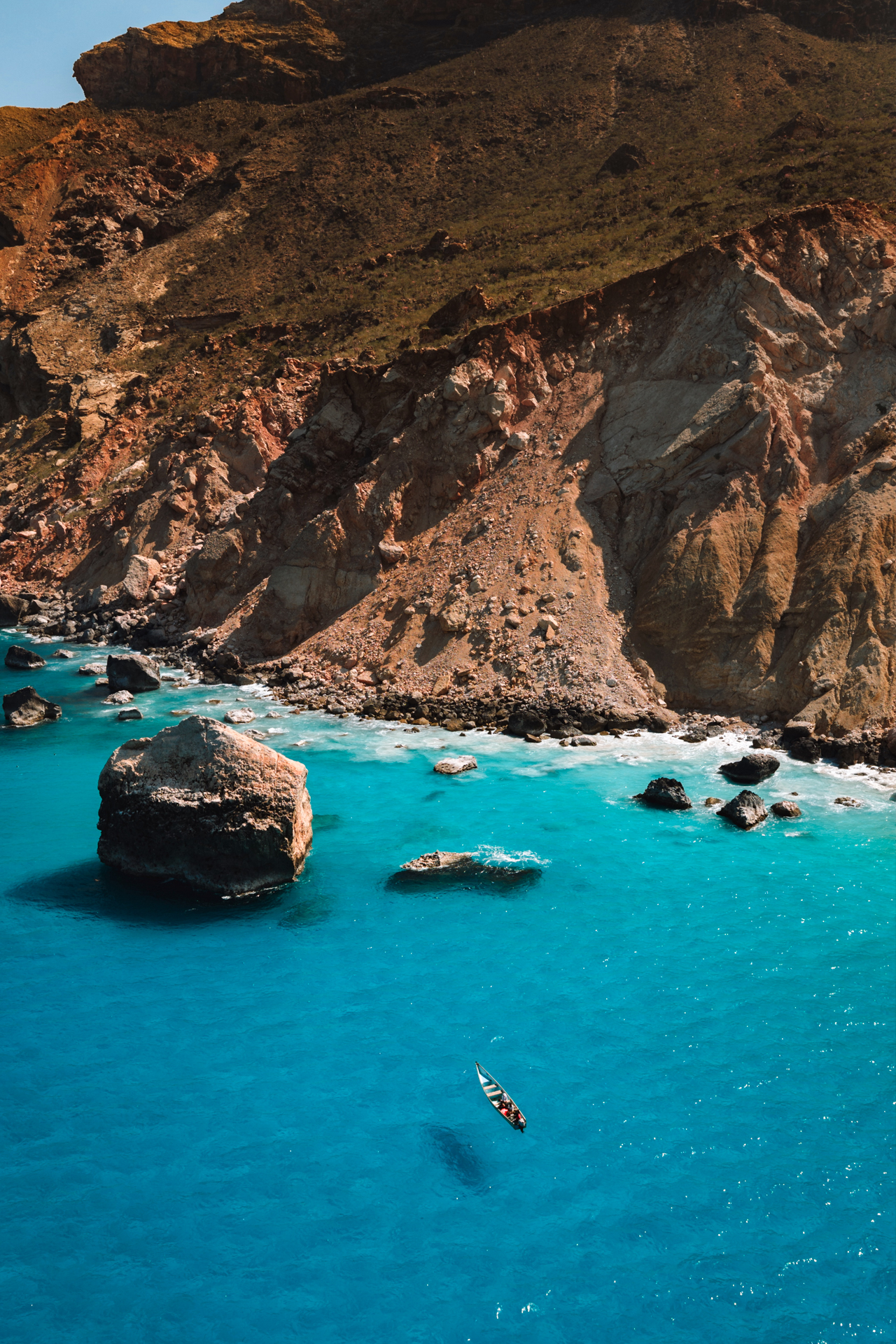
Small boat on turquoise water with rocky cliffs and boulders along Socotra’s coast.

Diksam Plateau

A highland area with dramatic views and deep canyons, dotted with dragon blood trees and known for its breathtaking sunsets.
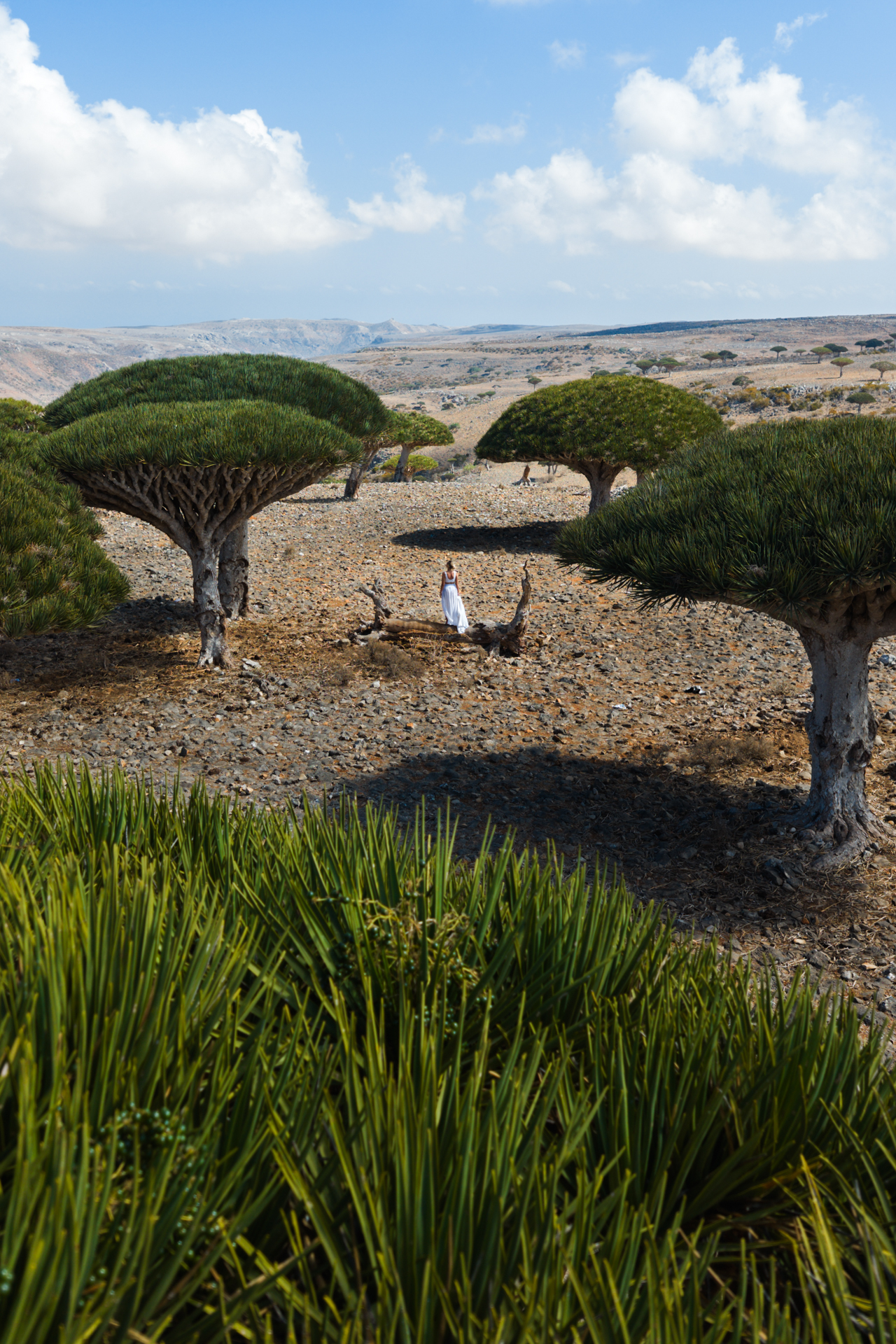
Woman in white dress walking among dragon blood trees at Diksam Plateau in Socotra.

Detwah Lagoon

A turquoise lagoon framed by soft white sand and towering limestone cliffs, ideal for swimming and known for its birdlife and traditional fishing culture.

Panoramic view of Detwah Lagoon with turquoise water on Socotra Island.

Shoab coast

A remote stretch of golden sand and clear waters, perfect for a boat trip to relax and swim, with dolphins often spotted along the shoreline.

Small boat on turquoise water with rocky cliffs and boulders along Socotra’s coast.

Diksam Plateau

A highland area with dramatic views and deep canyons, dotted with dragon blood trees and known for its breathtaking panoramic sunsets.

Woman in white dress walking among dragon blood trees at Diksam Plateau in Socotra.

Firmihin Forest

The largest gathering of Socotra’s dragon blood trees, with umbrella-shaped canopies and red resin that give the forest an otherworldly feel.
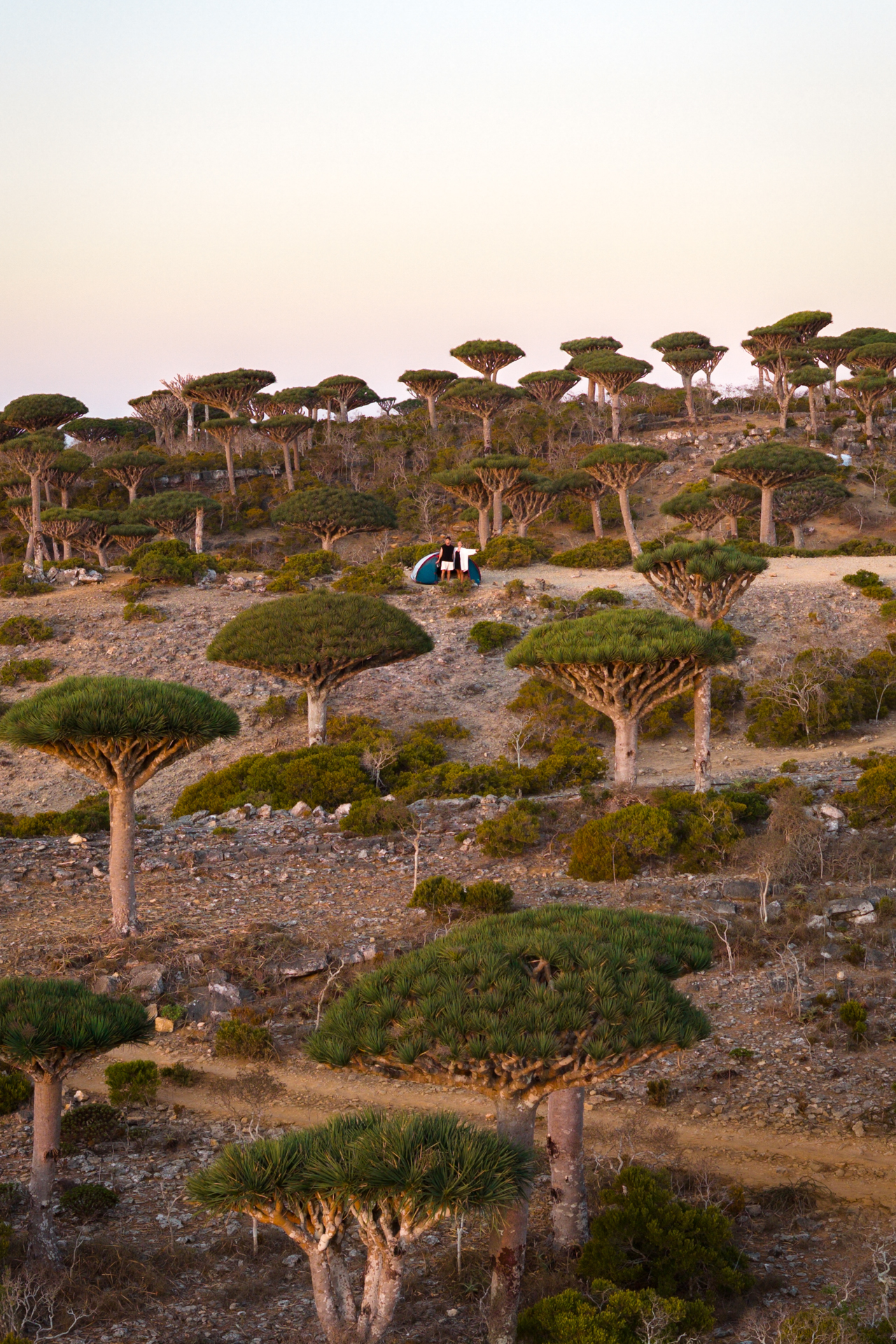
Tent set up among dragon blood trees at sunrise in Socotra’s highlands.

Dagub Cave

A vast limestone cave filled with striking rock formations, offering a cool escape from the heat and a fascinating glimpse into Socotra’s geology.
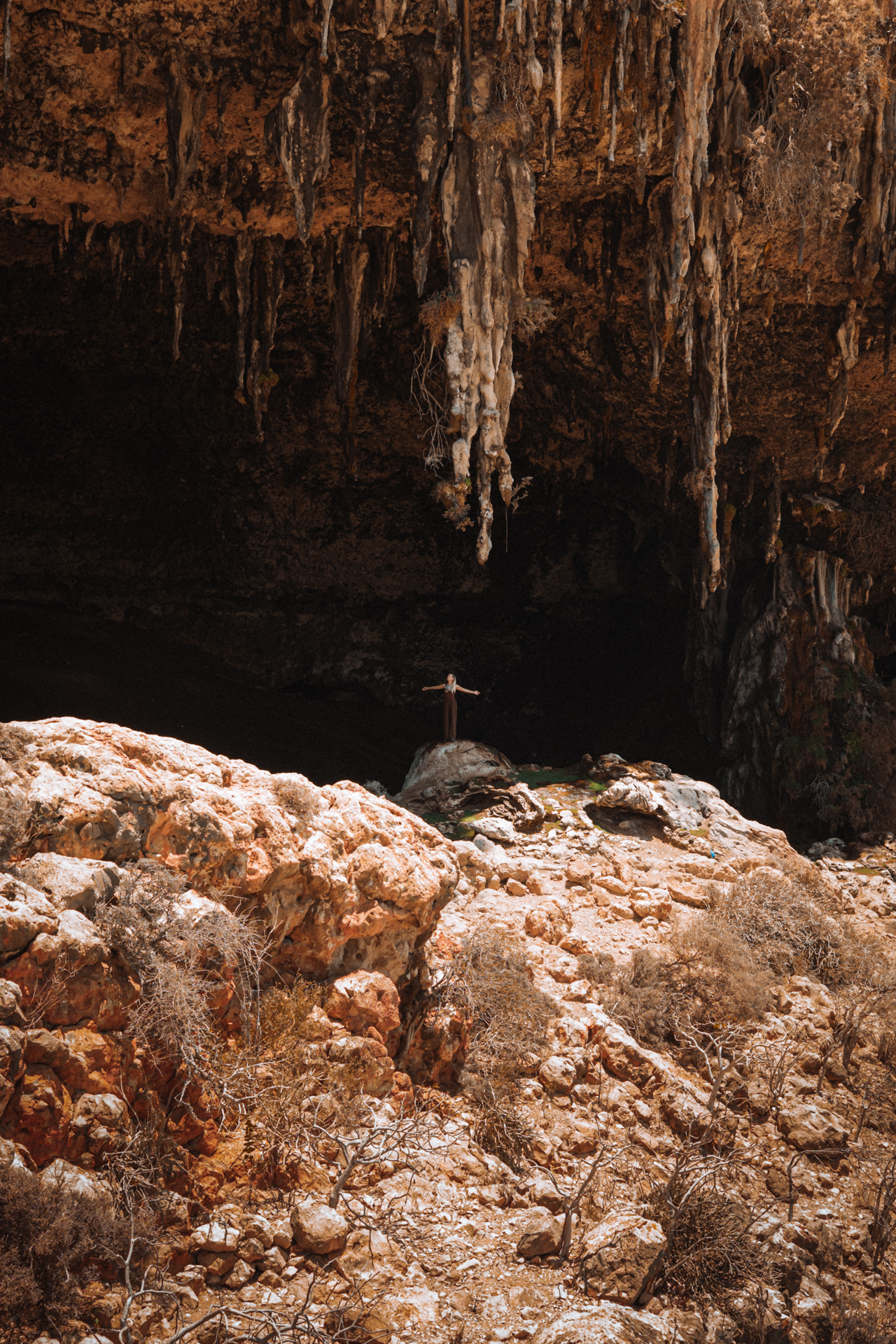
Traveler standing inside Dagub cave with stalactites in Socotra’s rocky terrain.

Zahek Dunes

Towering white sand dunes that roll dramatically into the sea, creating a surreal landscape perfect for photography and exploration.
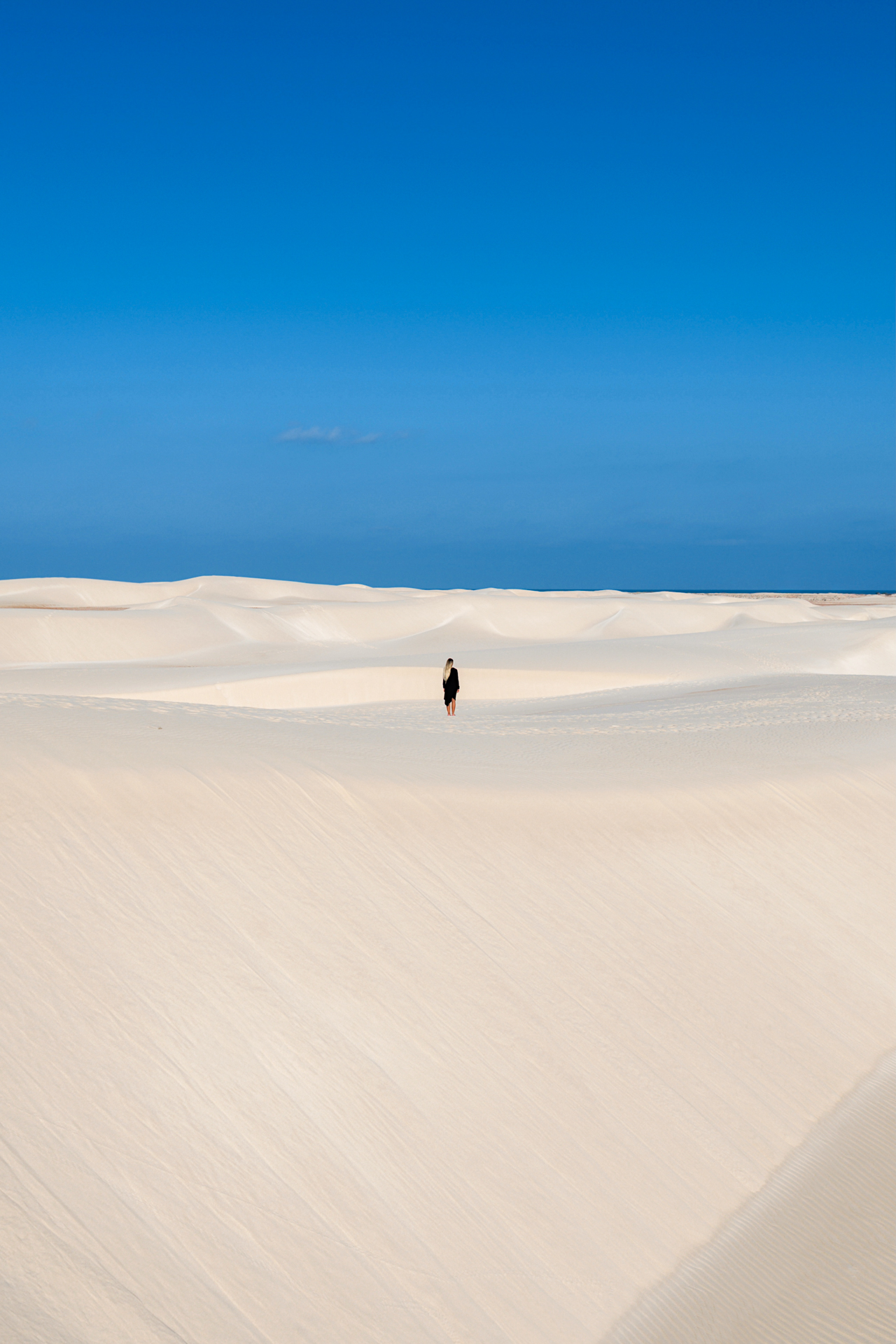
Lone traveler walking across vast white Zahek dunes under a blue sky in Socotra.

Firmihin Forest

The largest gathering of Socotra’s dragon blood trees, with umbrella-shaped canopies and red resin that give the forest an otherworldly feel.

Tent set up among dragon blood trees at sunrise in Socotra’s highlands.

Dagub Cave

A vast limestone cave filled with striking rock formations, offering a cool escape from the heat and a fascinating glimpse into Socotra’s geology.

Traveler standing inside Dagub cave with stalactites in Socotra’s rocky terrain.

Zahek Dunes

Towering white sand dunes that roll dramatically into the sea, creating a surreal landscape perfect for photography and exploration.

Lone traveler walking across vast white Zahek dunes under a blue sky in Socotra.

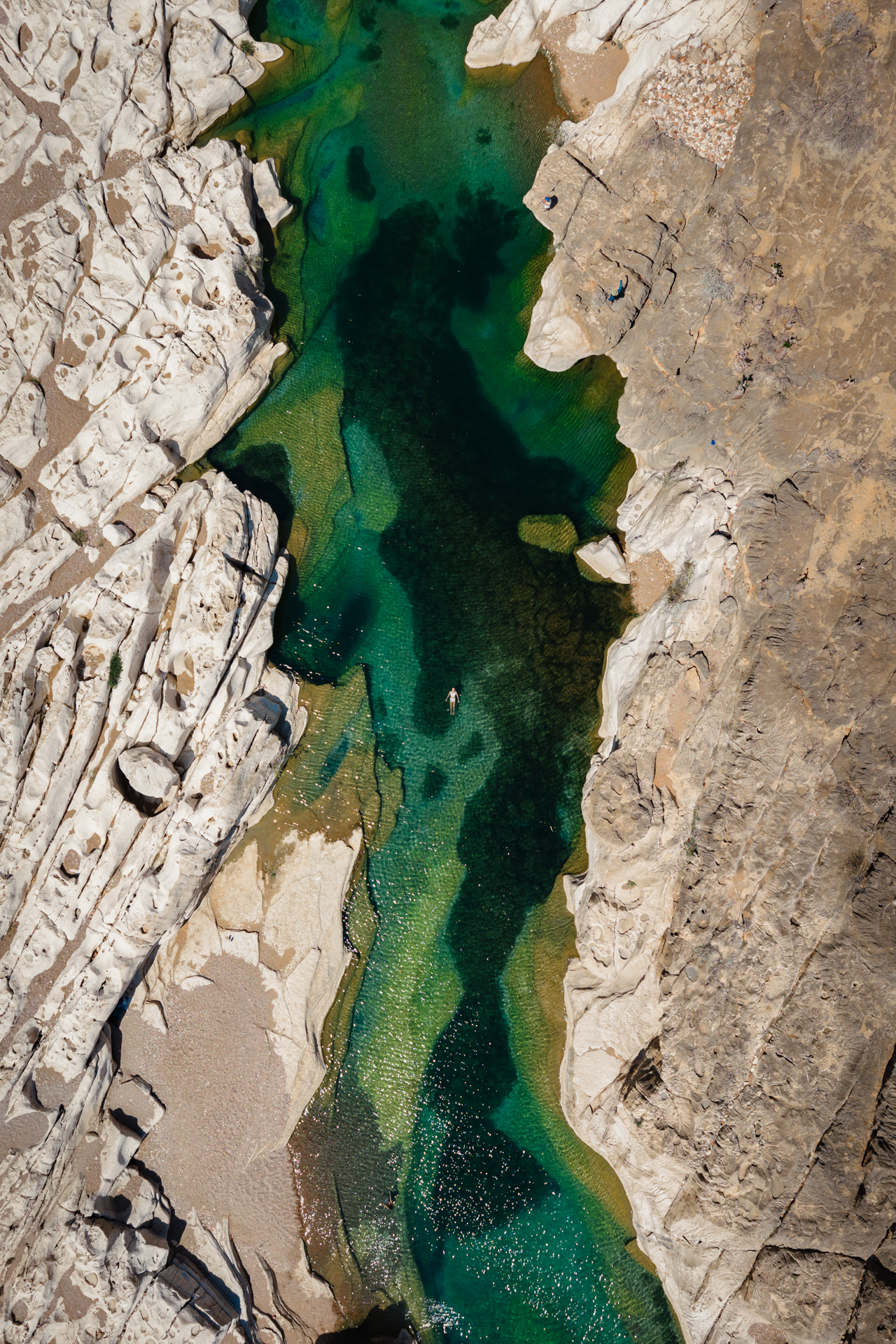
Wadi Kalissan

A hidden valley surrounded by cliffs, with natural pools and freshwater streams, perfect for cooling off and enjoying Socotra’s striking scenery.
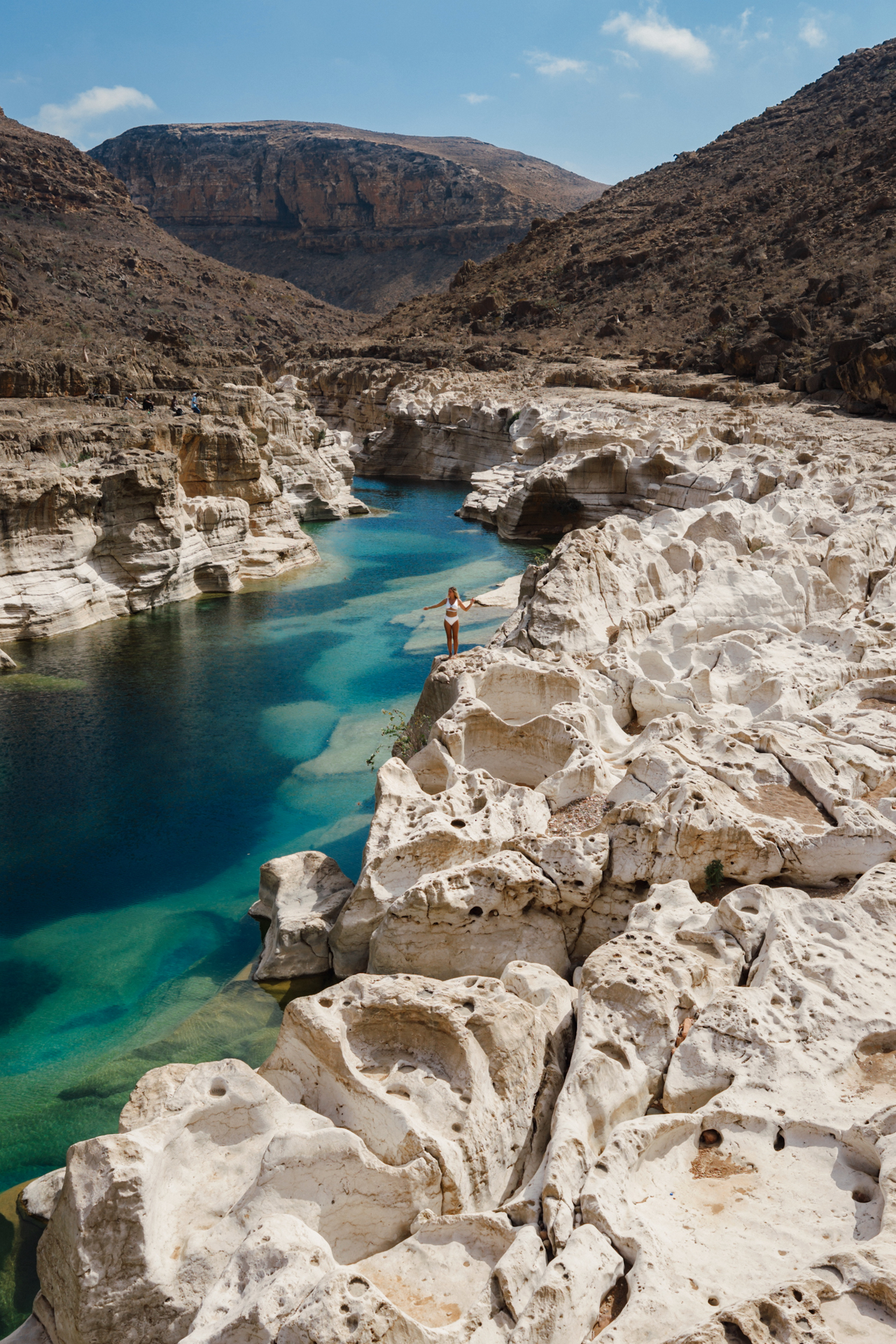
Woman standing on white limestone cliffs at Wadi Kalissan above a turquoise pool in Socotra.

Arher Sand Dunes

A surreal spot where giant sand dunes rise dramatically behind a turquoise shoreline. It’s one of the island’s most photogenic and unusual beaches.
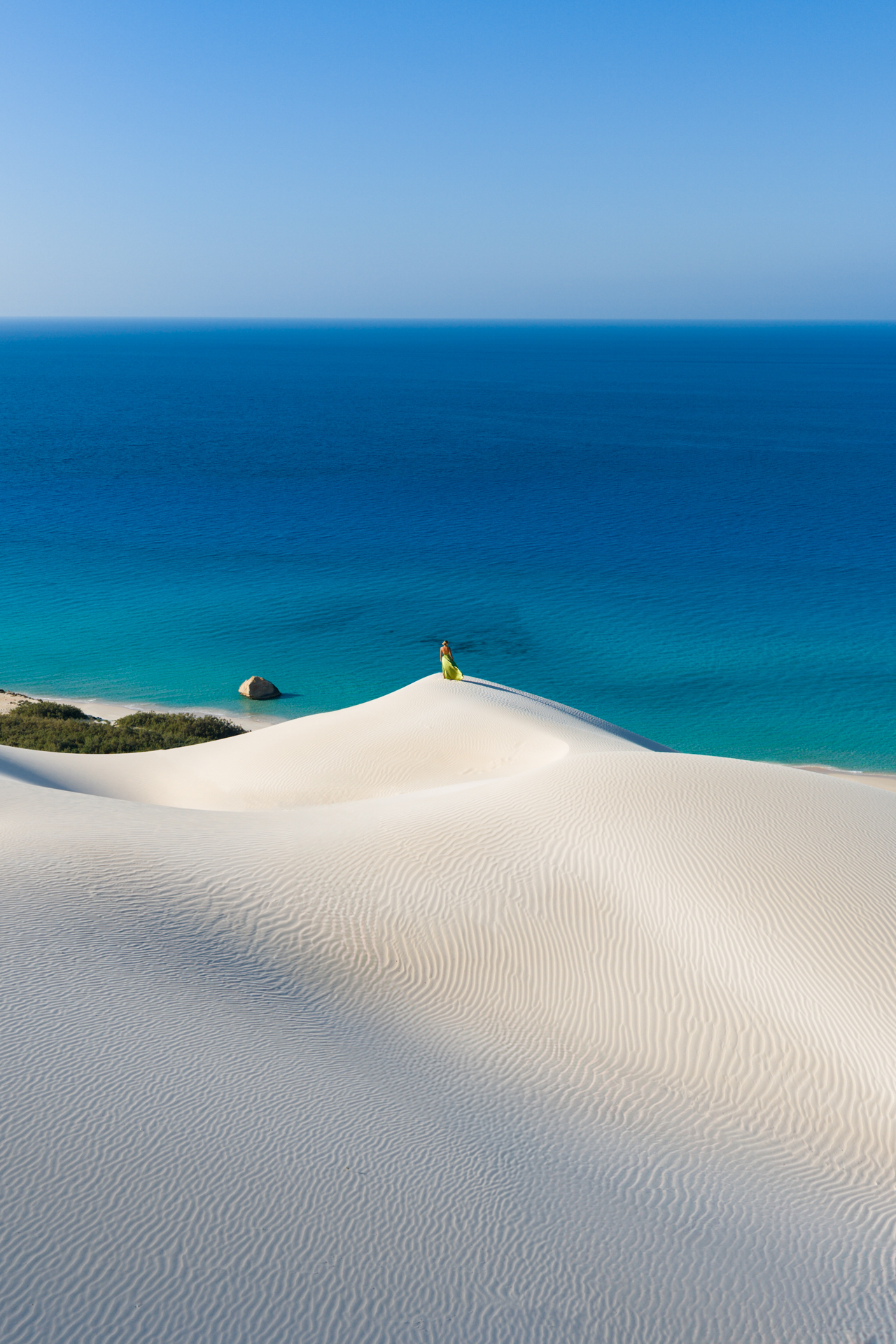
Woman in a green dress on top of Arher sand dunes overlooking the blue sea in Socotra.

Hadibo

The island’s lively capital, where colorful markets, crowded shops, and chaotic local culture give visitors a taste of everyday life on Socotra.
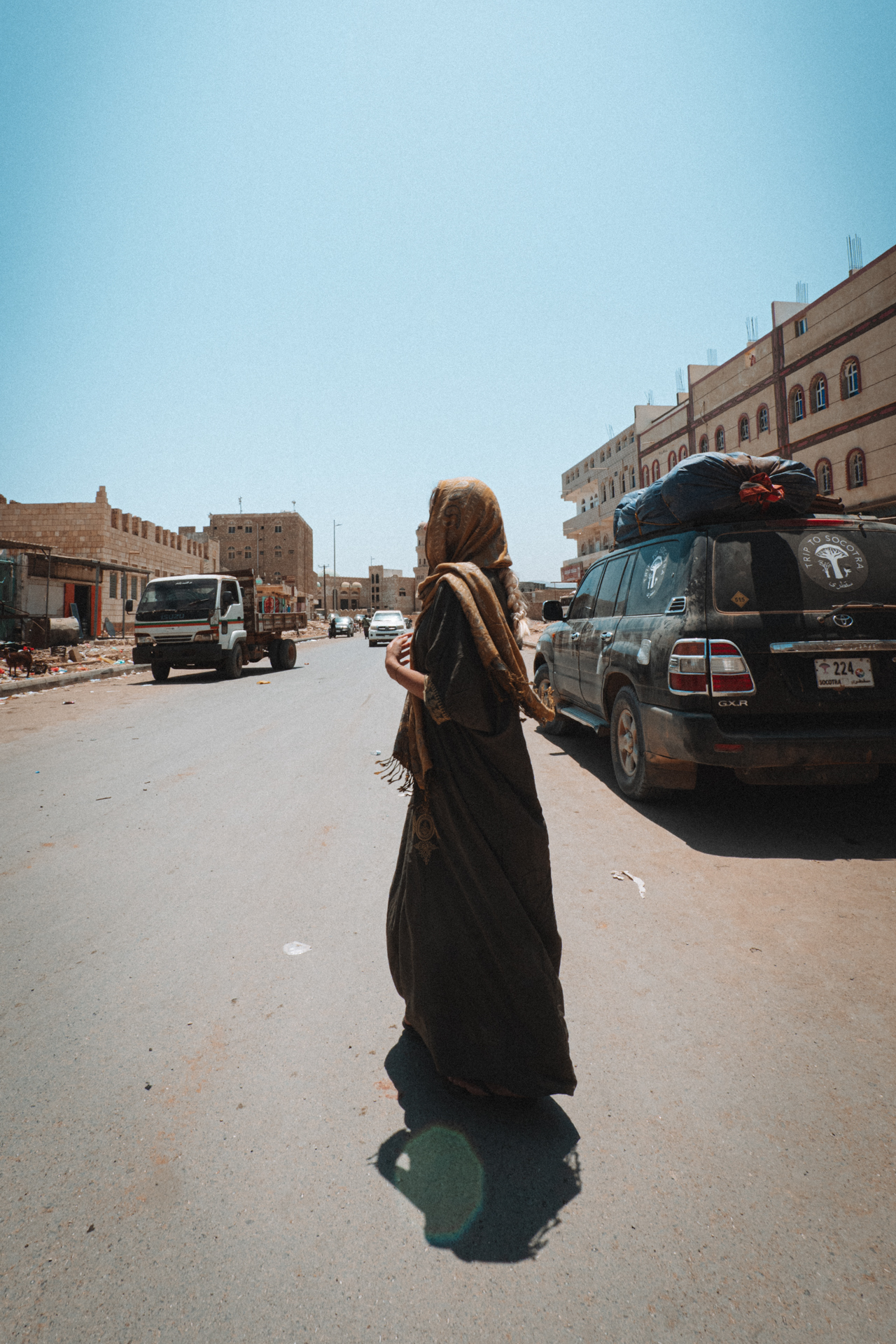
Woman in traditional dress walking on a street in Hadibo, Socotra’s main town.

Wadi Kalissan

A hidden valley surrounded by cliffs, with natural pools and freshwater streams, perfect for cooling off and enjoying Socotra’s striking scenery.

Woman standing on white limestone cliffs at Wadi Kalissan above a turquoise pool in Socotra.

Arher Dunes

A surreal spot where giant sand dunes rise dramatically behind a turquoise shoreline. It’s one of the island’s most photogenic wild beaches.

Woman in a green dress on top of Arher sand dunes overlooking the blue sea in Socotra.

Hadibo

The island’s lively capital, where colorful markets, crowded shops, and chaotic local culture give visitors a taste of everyday life on Socotra.

Woman in traditional dress walking on a street in Hadibo, Socotra’s main town.


Socotra travel guide


Questions & Answers

Socotra travel tips

Traveler walking on vast golden Arher sand dunes of Socotra at sunset.

Pack light clothes for the heat, a hat, sunscreen, swimwear, hiking shoes, bug spray, hand sanitizer, a small first aid kit, and a scarf or cover-up for sun and wind. Women should also bring a loose dress that covers shoulders and knees for visiting villages. Power adapter: Types G and D may be useful in the few hotels in Hadibo, but otherwise you’ll rely on charging from the car. Bring a power bank and a car charger (USB/cigarette lighter), as camping offers no other access to electricity. Ohh and a few rolls of toilet paper are always a good idea.

If you want to stay connected, it is best to get an Etisalat SIM card when you arrive in the United Arab Emirates at the airport. In Socotra, reception is quite limited and you will not have service every single day, but you will get some connection on certain days. Even if you normally use a lot of data, 1 to 2 GB should be more than enough. Still, it is a good idea to take this as an opportunity to disconnect, slow down, and enjoy the breathtaking natural beauty of Socotra while being mostly offline.

No, Socotra is not a budget destination because access is limited and tours are usually organized packages. Tours in Socotra start in the four-digit range. The tours cover everything you need in Socotra besides your flight to Abu Dhabi and tips for the tour team. Currency: Yemeni Rial (YER).

The number one question I’ve gotten about Socotra is, ‘Is it safe?’ Although Yemen has been facing a tragic civil war for over a decade, the conflict has not reached Socotra Island. Socotra is quite remote, about three days by boat from mainland Yemen, and has remained peaceful throughout the crisis. During my time here, I felt completely safe, even while camping and exploring. Of course, it’s always wise to do your own research. The flights from Abu Dhabi go directly to Socotra.

Yes, a Yemen visa is required and is usually arranged through local tour operators. Many Socotra tour companies include the visa in their package price and handle the paperwork for you, but it’s always best to confirm with your operator before booking. Tip: When I arrived at the airport, I asked immigration not to stamp inside my passport but instead on the printed visa I received from my tour company. Why? Some travelers recommend this because certain countries may question or restrict entry if they see a Yemen stamp in your passport.

Socotri is the local language, but Arabic is also spoken. English is very limited, though guides usually speak it. Learning a few basic Arabic phrases can be very helpful when interacting with locals — for example, ‘shukran’ means thank you.

Socotra is unlike anywhere else on Earth, a place of surreal landscapes, rare species, and genuine hospitality. My Socotra travel experience felt truly unique because we chose a private tour, which gave us more freedom to plan our route and spend extra time at the places we loved most. Important: not all group tours allow you to customize your itinerary, so always ask in advance if you’re interested in a private tour! Make sure to check out Pakistan as well!

Traveler walking on vast golden Arher sand dunes of Socotra at sunset.

Pack light clothes for the heat, a hat, sunscreen, swimwear, hiking shoes, bug spray, hand sanitizer, a small first aid kit, and a scarf or cover-up for sun and wind. Women should also bring a loose dress that covers shoulders and knees for visiting villages. Power adapter: Types G and D may be useful in the few hotels in Hadibo, but otherwise you’ll rely on charging from the car. Bring a power bank and a car charger (USB/cigarette lighter), as camping offers no other access to electricity. Ohh and a few rolls of toilet paper are always a good idea.

If you want to stay connected, it is best to get an Etisalat SIM card when you arrive in the United Arab Emirates at the airport. In Socotra, reception is quite limited and you will not have service every single day, but you will get some connection on certain days. Even if you normally use a lot of data, 1 to 2 GB should be more than enough. Still, it is a good idea to take this as an opportunity to disconnect, slow down, and enjoy the breathtaking natural beauty of Socotra while being mostly offline.

No, Socotra is not a budget destination because access is limited and tours are usually organized packages. Tours in Socotra start in the four-digit range. The tours cover everything you need in Socotra besides your flight to Abu Dhabi and tips for the tour team. Currency: Yemeni Rial (YER).

The number one question I’ve gotten about Socotra is, ‘Is it safe?’ Although Yemen has been facing a tragic civil war for over a decade, the conflict has not reached Socotra Island. Socotra is quite remote, about three days by boat from mainland Yemen, and has remained peaceful throughout the crisis. During my time here, I felt completely safe, even while camping and exploring. Of course, it’s always wise to do your own research. The flights from Abu Dhabi go directly to Socotra.

Yes, a Yemen visa is required and is usually arranged through local tour operators. Many Socotra tour companies include the visa in their package price and handle the paperwork for you, but it’s always best to confirm with your operator before booking. Tip: When I arrived at the airport, I asked immigration not to stamp inside my passport but instead on the printed visa I received from my tour company. Why? Some travelers recommend this because certain countries may question or restrict entry if they see a Yemen stamp in your passport.

Socotri is the local language, but Arabic is also spoken. English is very limited, though guides usually speak it. Learning a few basic Arabic phrases can be very helpful when interacting with locals — for example, ‘shukran’ means thank you.

Socotra is unlike anywhere else on Earth, a place of surreal landscapes, rare species, and genuine hospitality. My Socotra travel experience felt truly unique because we chose a private tour, which gave us more freedom to plan our route and spend extra time at the places we loved most. Important: not all group tours allow you to customize your itinerary, so always ask in advance if you’re interested in a private tour! Make sure to check out Pakistan as well!

Traveler walking on vast golden Arher sand dunes of Socotra at sunset.

Pack light clothes for the heat, a hat, sunscreen, swimwear, hiking shoes, bug spray, hand sanitizer, a small first aid kit, and a scarf or cover-up for sun and wind. Women should also bring a loose dress that covers shoulders and knees for visiting villages. Power adapter: Types G and D may be useful in the few hotels in Hadibo, but otherwise you’ll rely on charging from the car. Bring a power bank and a car charger (USB/cigarette lighter), as camping offers no other access to electricity. Ohh and a few rolls of toilet paper are always a good idea.

If you want to stay connected, it is best to get an Etisalat SIM card when you arrive in the United Arab Emirates at the airport. In Socotra, reception is quite limited and you will not have service every single day, but you will get some connection on certain days. Even if you normally use a lot of data, 1 to 2 GB should be more than enough. Still, it is a good idea to take this as an opportunity to disconnect, slow down, and enjoy the breathtaking natural beauty of Socotra while being mostly offline.

No, Socotra is not a budget destination because access is limited and tours are usually organized packages. Tours in Socotra start in the four-digit range. The tours cover everything you need in Socotra besides your flight to Abu Dhabi and tips for the tour team. Currency: Yemeni Rial (YER).

The number one question I’ve gotten about Socotra is, ‘Is it safe?’ Although Yemen has been facing a tragic civil war for over a decade, the conflict has not reached Socotra Island. Socotra is quite remote, about three days by boat from mainland Yemen, and has remained peaceful throughout the crisis. During my time here, I felt completely safe, even while camping and exploring. Of course, it’s always wise to do your own research. The flights from Abu Dhabi go directly to Socotra.

Yes, a Yemen visa is required and is usually arranged through local tour operators. Many Socotra tour companies include the visa in their package price and handle the paperwork for you, but it’s always best to confirm with your operator before booking. Tip: When I arrived at the airport, I asked immigration not to stamp inside my passport but instead on the printed visa I received from my tour company. Why? Some travelers recommend this because certain countries may question or restrict entry if they see a Yemen stamp in your passport.

Socotri is the local language, but Arabic is also spoken. English is very limited, though guides usually speak it. Learning a few basic Arabic phrases can be very helpful when interacting with locals — for example, ‘shukran’ means thank you.

Socotra is unlike anywhere else on Earth, a place of surreal landscapes, rare species, and genuine hospitality. My Socotra travel experience felt truly unique because we chose a private tour, which gave us more freedom to plan our route and spend extra time at the places we loved most. Important: not all group tours allow you to customize your itinerary, so always ask in advance if you’re interested in a private tour! Make sure to check out Pakistan as well!


Loved it? Pin it, Share it!

Inspire Others to Travel to Socotra


Keep Exploring

More Travel Guides from Socotra
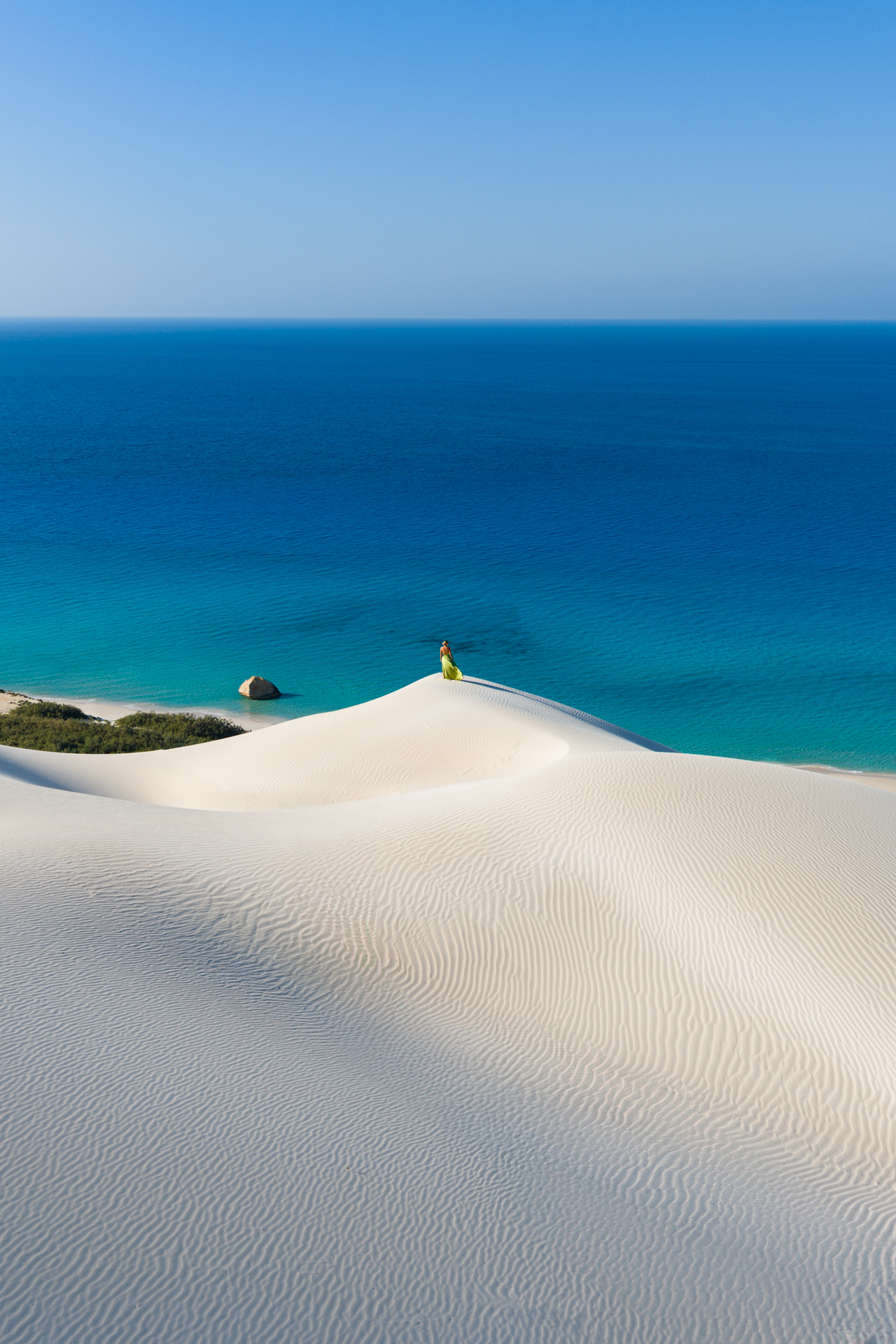


Socotra travel YOUTUBE VIDEO

SOCOTRA, Yemen – The Island I’ll Never Forget

Craving more? Head to my YouTube channel for the full adventure in motion. Get inspired through stories, scenery, and tips!

THE TRAVEL

Woman standing on salt brick stairs – Uyuni