
Discover Fenghuang Ancient Town


Hunan’s Most Photogenic Old Town
FENGHUANG ANCIENT TOWN, CHINA: Complete Travel Guide
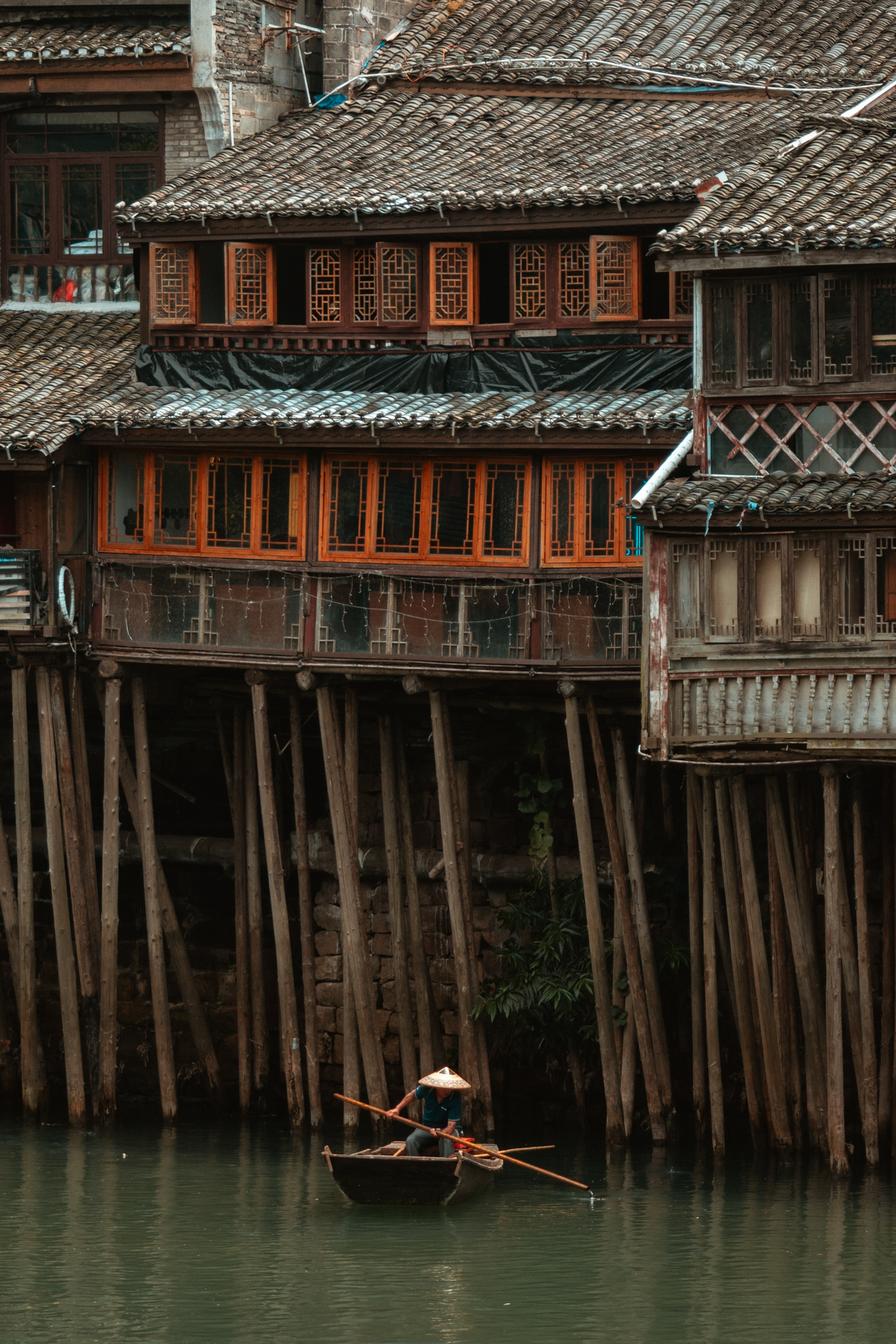
Fenghuang Ancient Town is one of those places that feels like stepping straight into a movie scene, and then you turn a corner and it just keeps going. Wooden stilt houses leaning out over the Tuojiang River on long thin legs, stone bridges, lantern light on the water, and a name that means phoenix. It suits the place.
In this Fenghuang Ancient Town travel guide I will walk you through everything you need to plan it properly, from the high speed train to where to sleep, where to eat, and the practical China things nobody warns you about until you are already standing at the station.

The Town That Changes After Dark
About Fenghuang Ancient Town
Fenghuang, or Phoenix Ancient Town, sits in the far west of Hunan Province, tucked into green hills close to the border with Guizhou. The nearest name most people recognise is Zhangjiajie, about an hour away by high speed train, which is exactly why so many travellers add Fenghuang onto a Zhangjiajie trip. It belongs to the Xiangxi Tujia and Miao Autonomous Prefecture, and that matters more than it sounds.
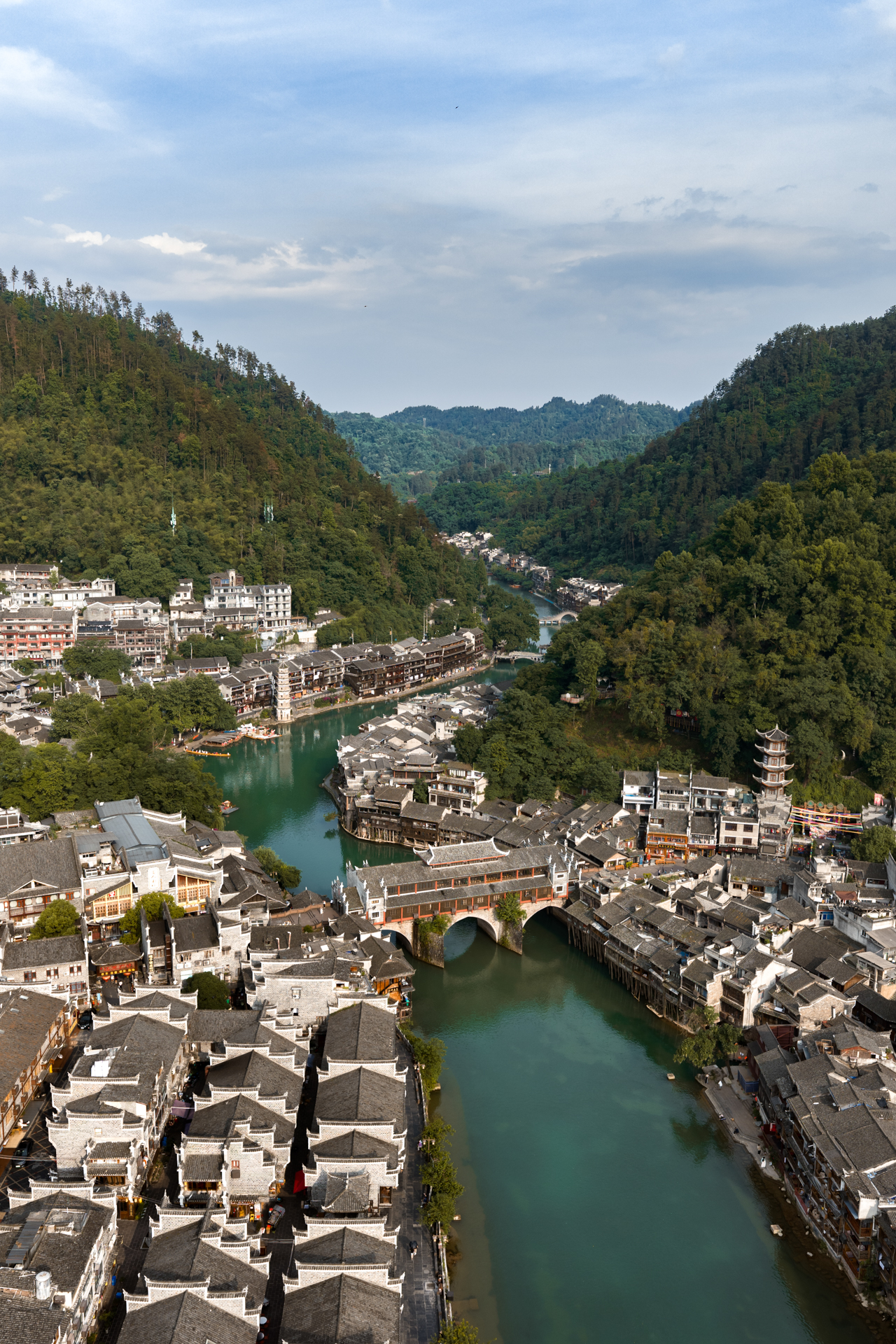
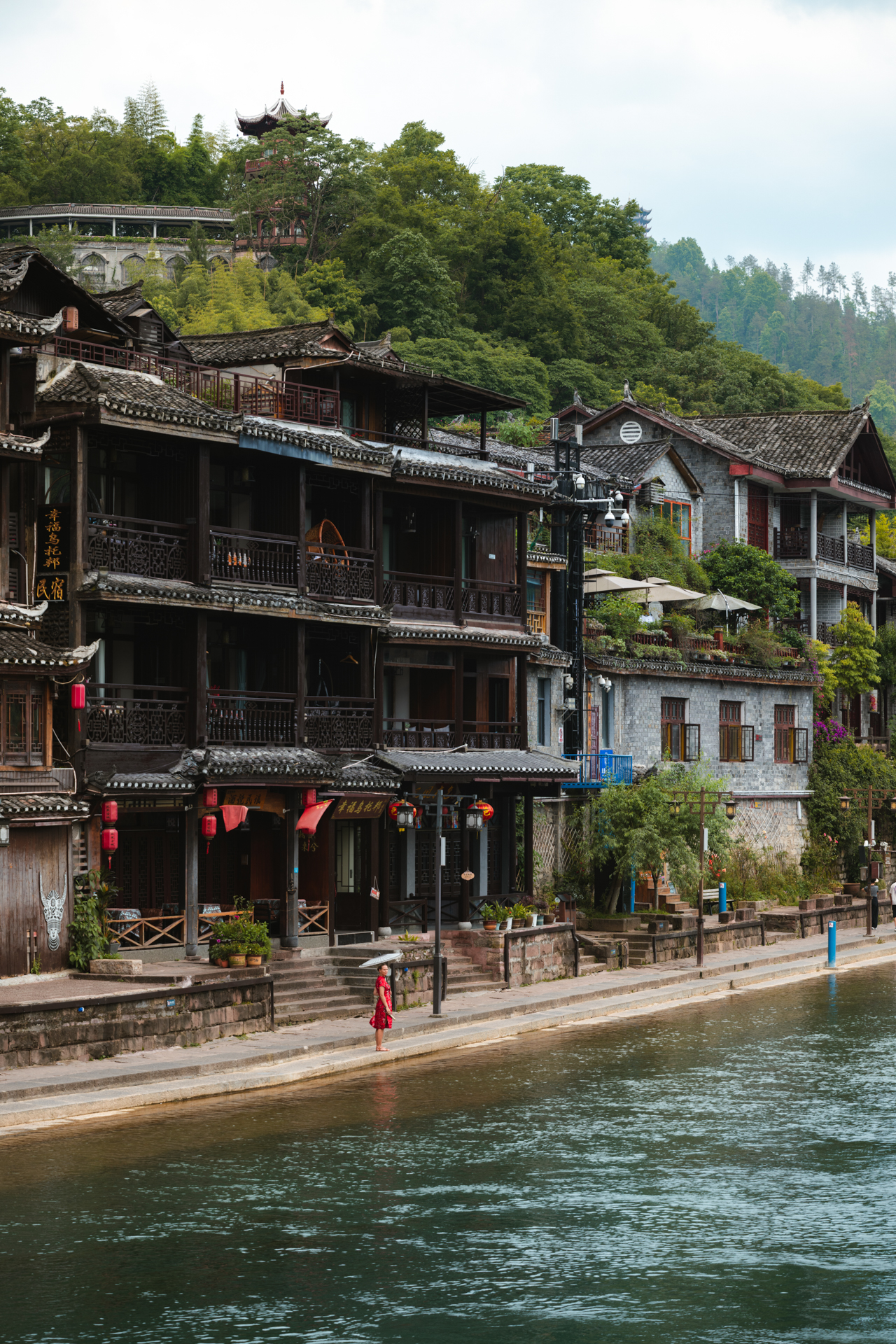
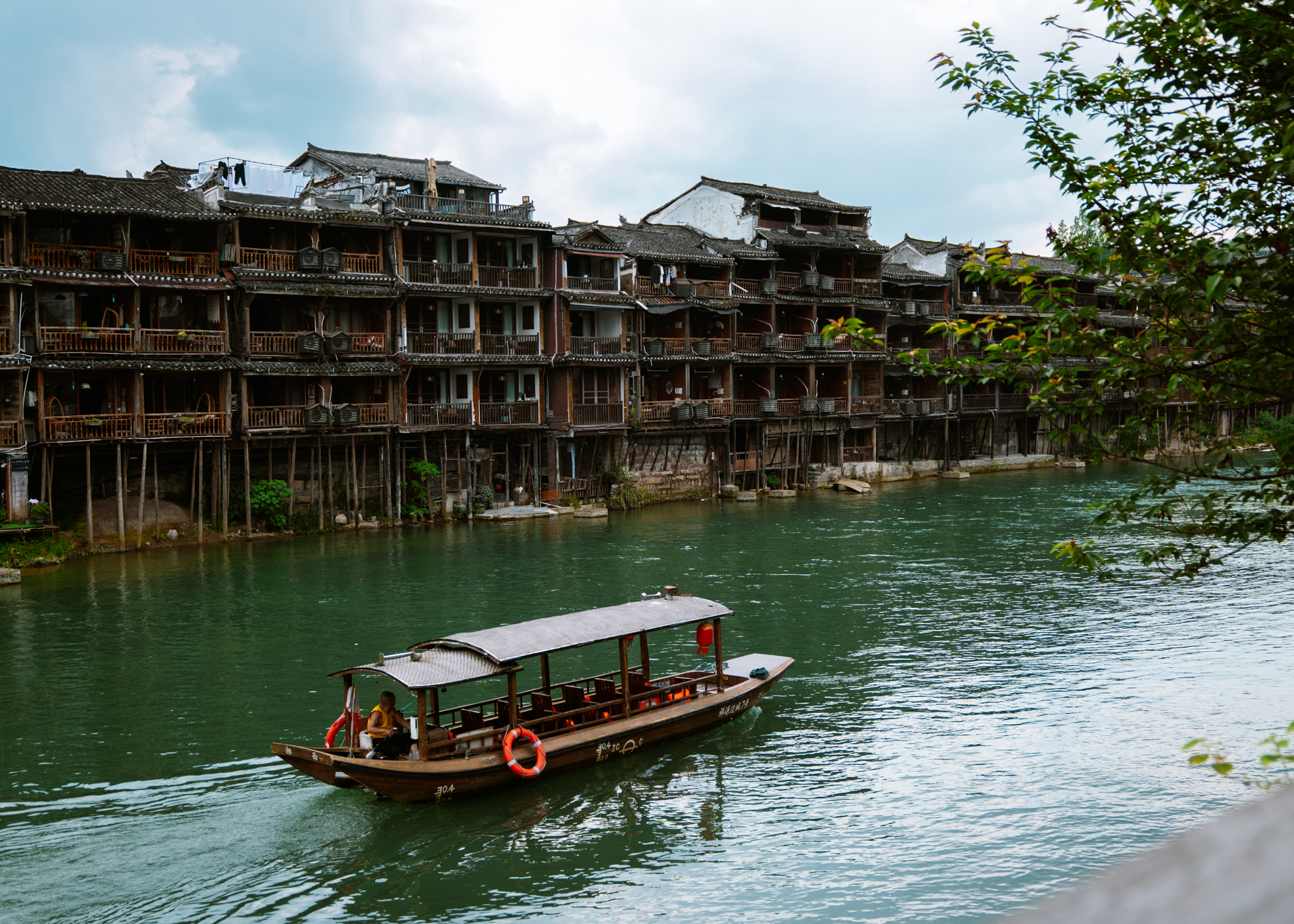
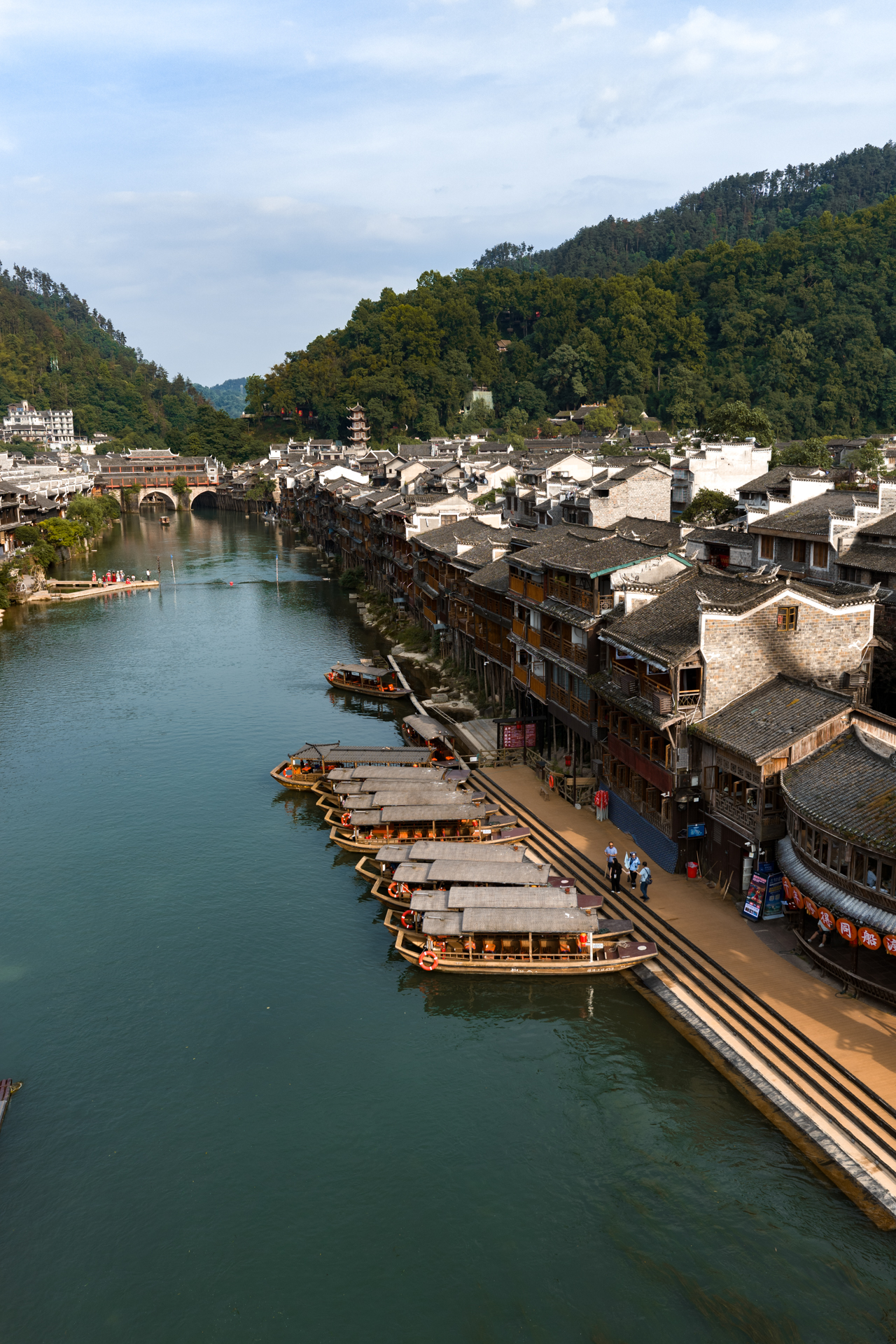
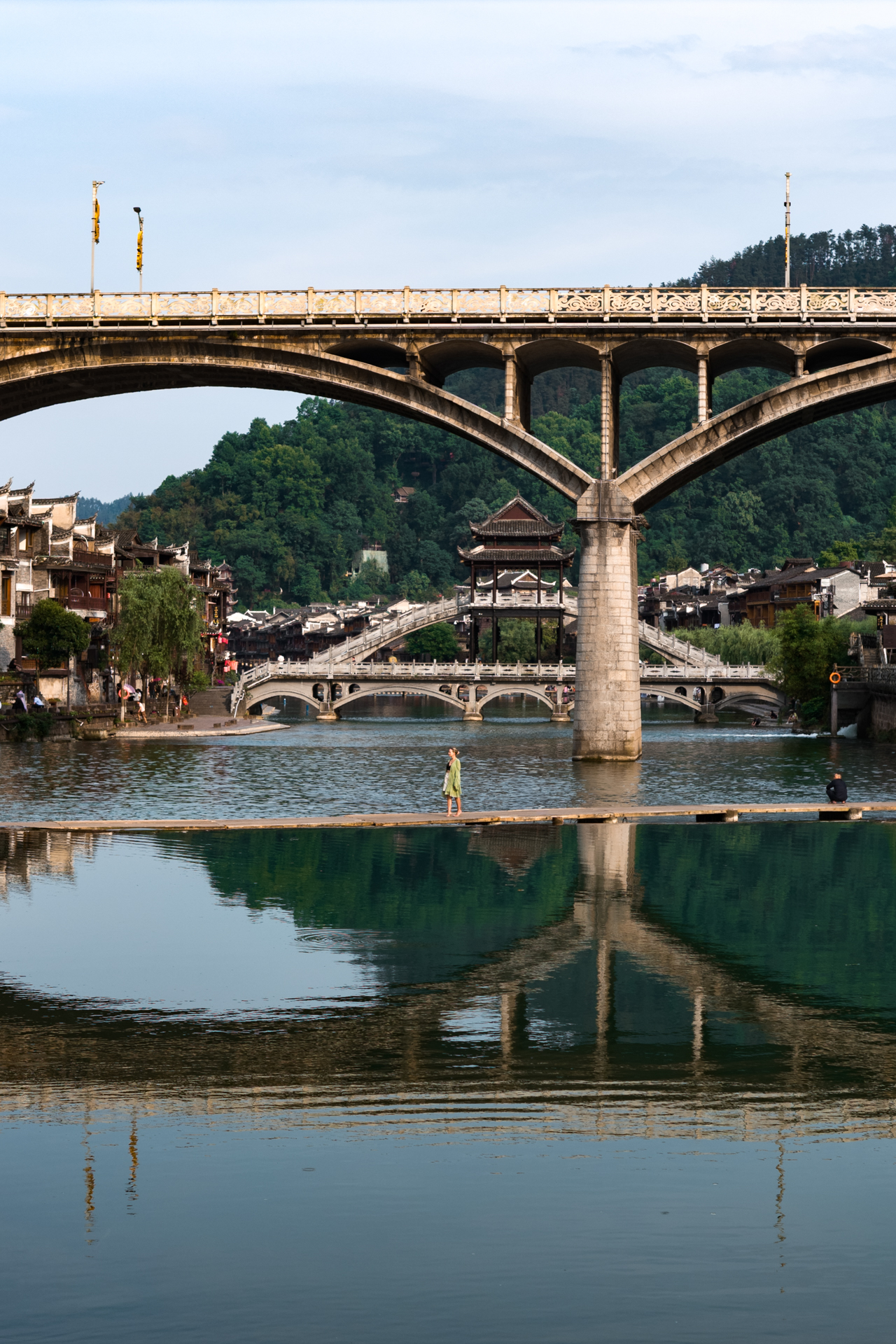
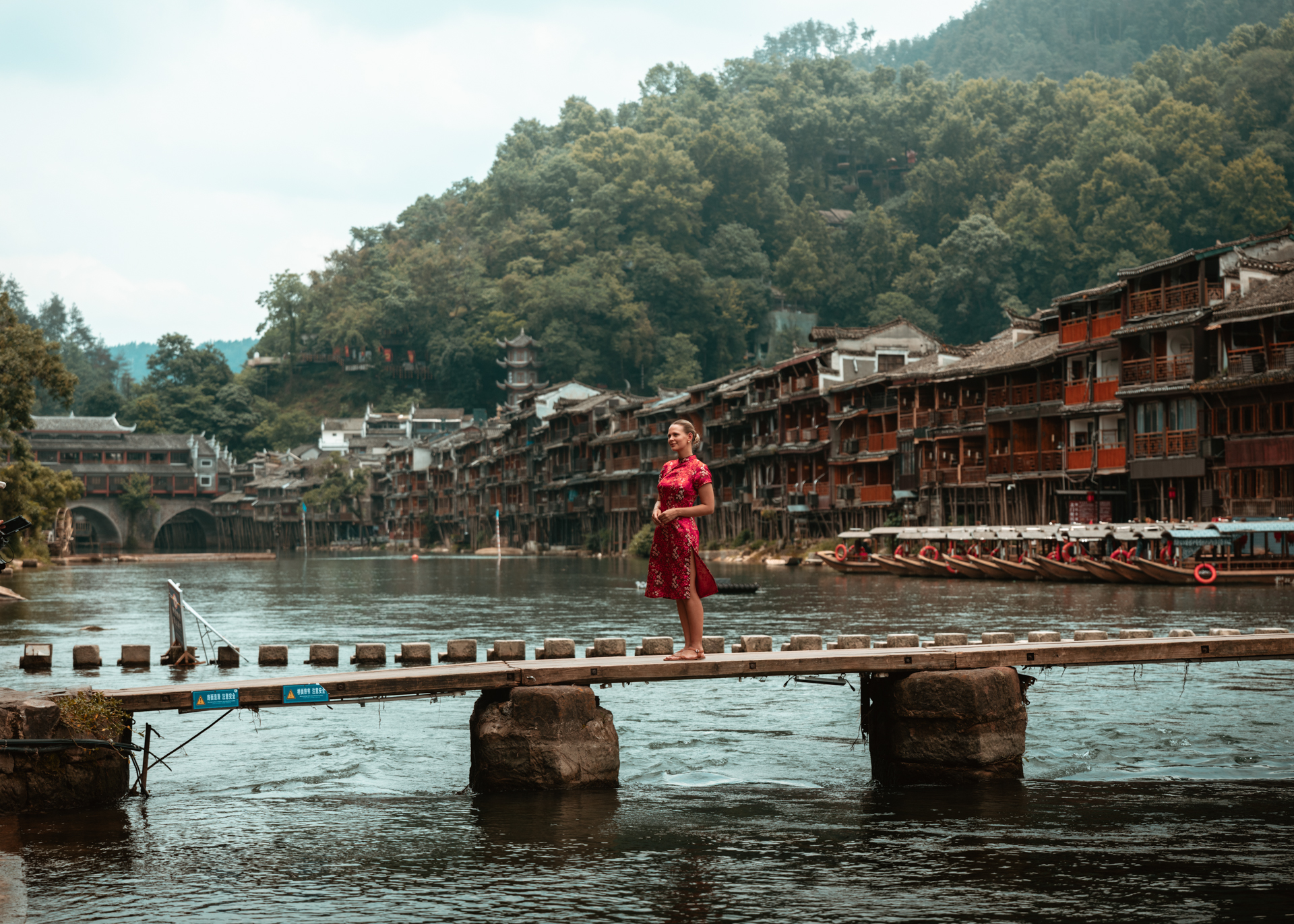
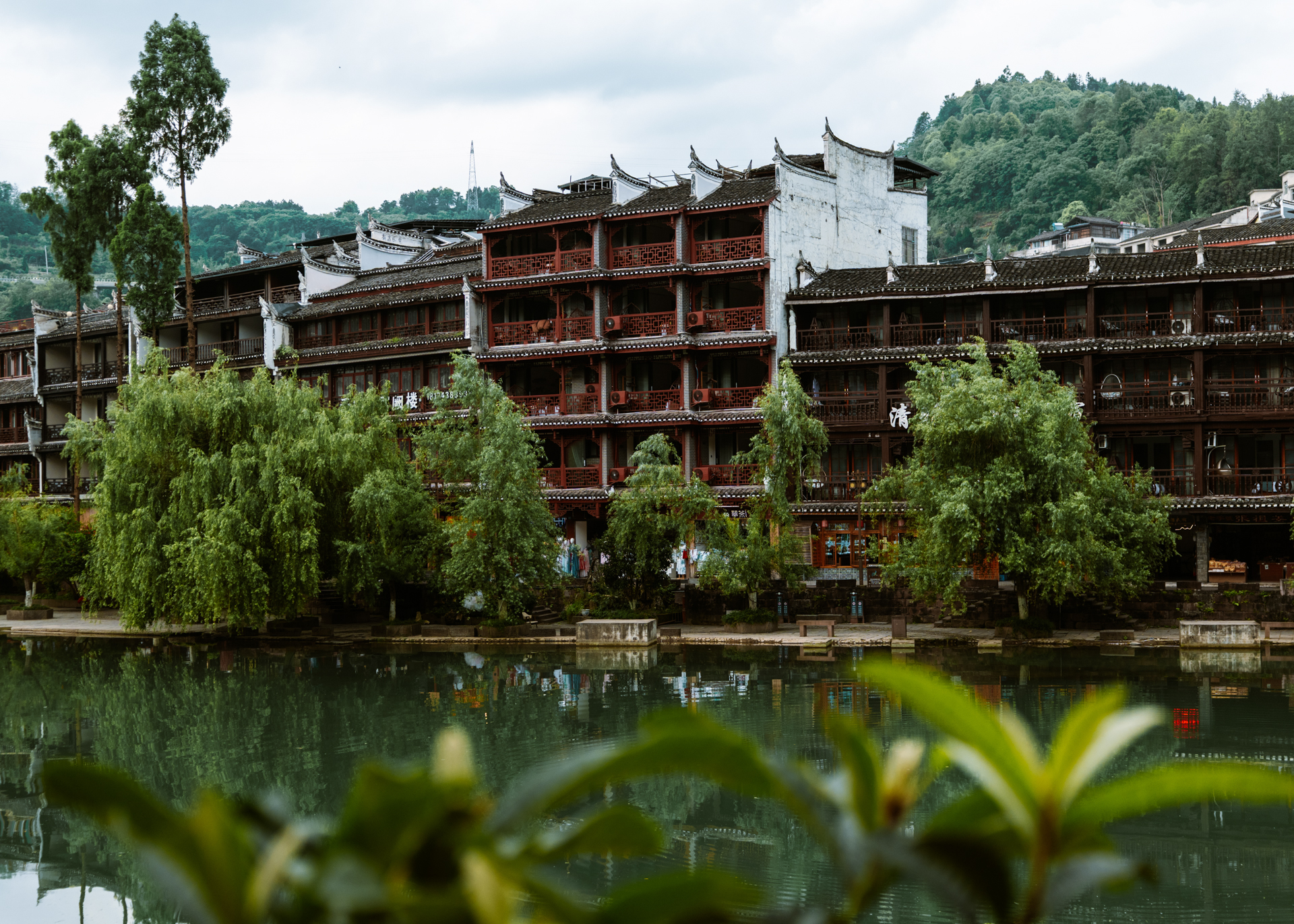
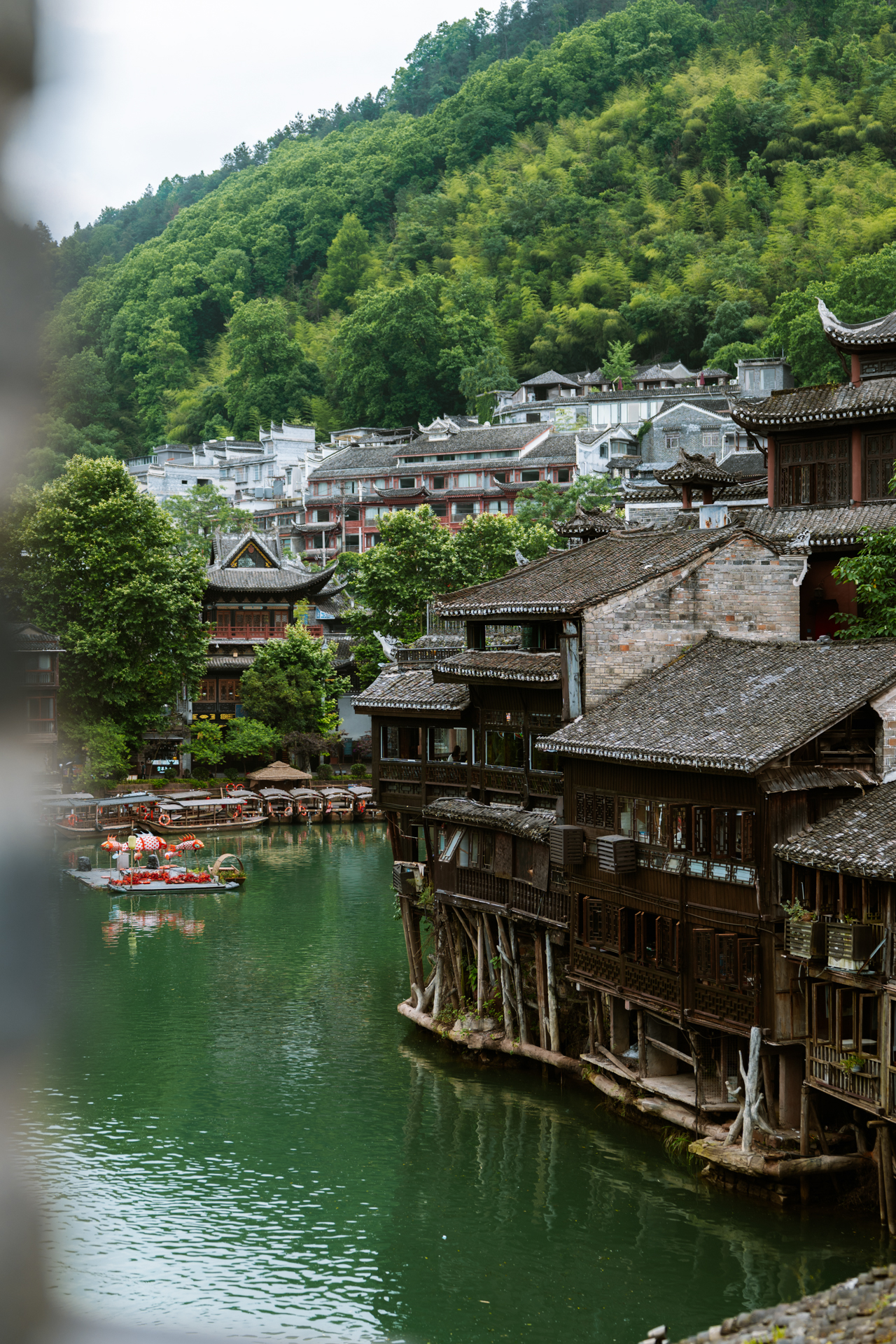
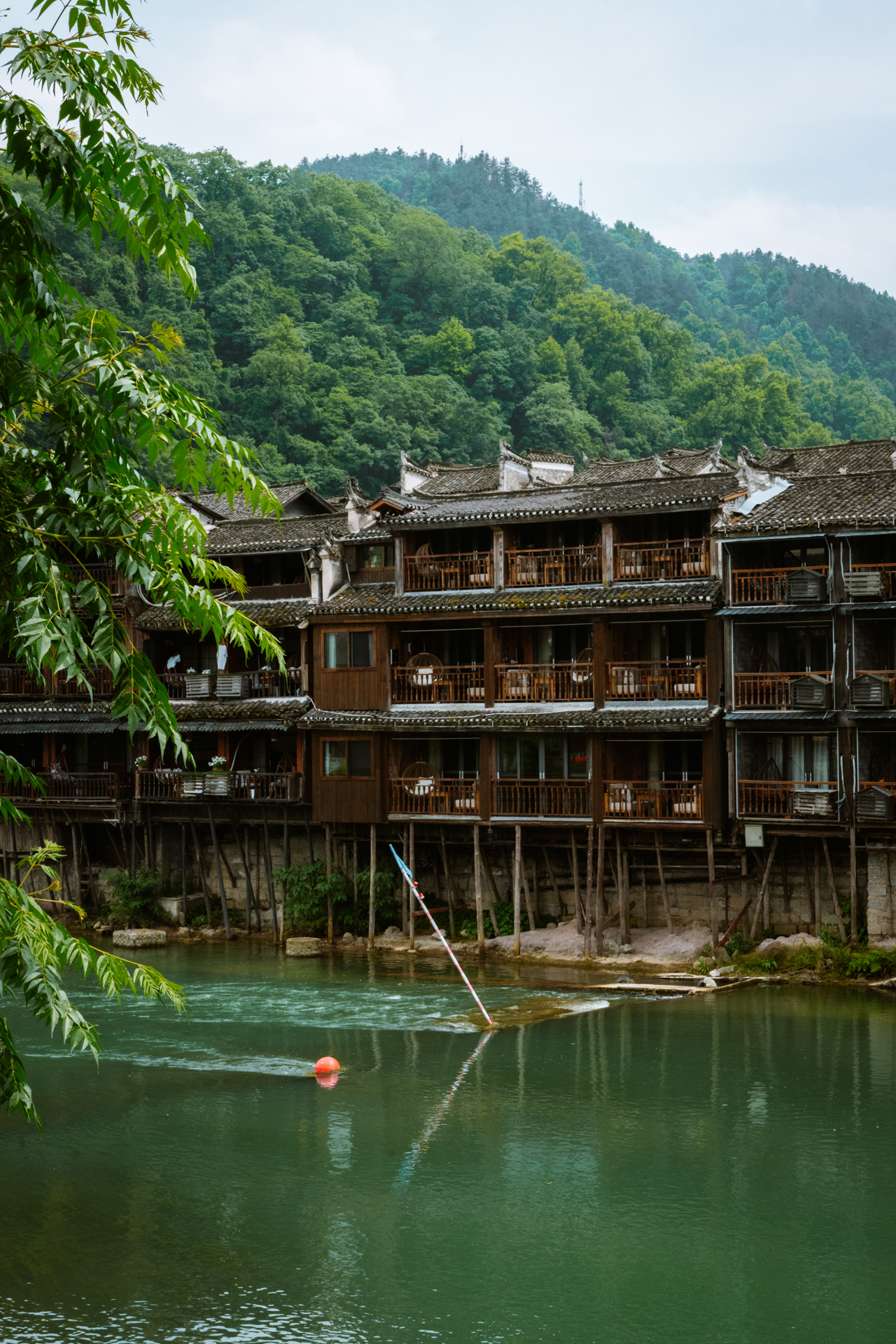
The town is famous for one thing above all else: the wooden stilt houses, called diaojiaolou, that hang out over the Tuojiang River on tall wooden legs. The oldest of them are a couple of hundred years old and were built without nails. Add a Ming dynasty covered bridge, a stretch of old city wall, twelve bridges in total, and a line of stone stepping stones you hop across instead of using any bridge at all, and you understand why it keeps getting called the most beautiful ancient town in China.
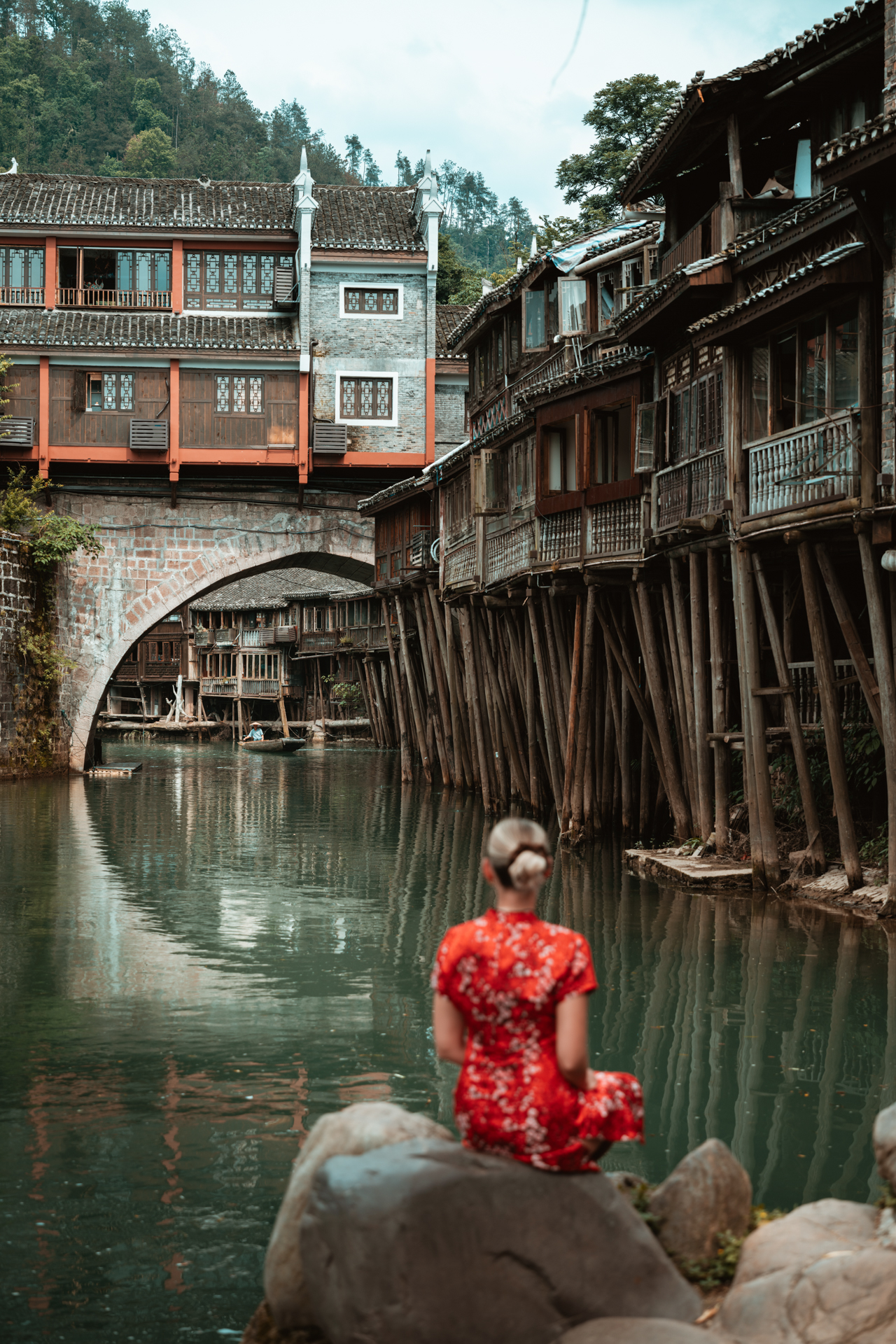
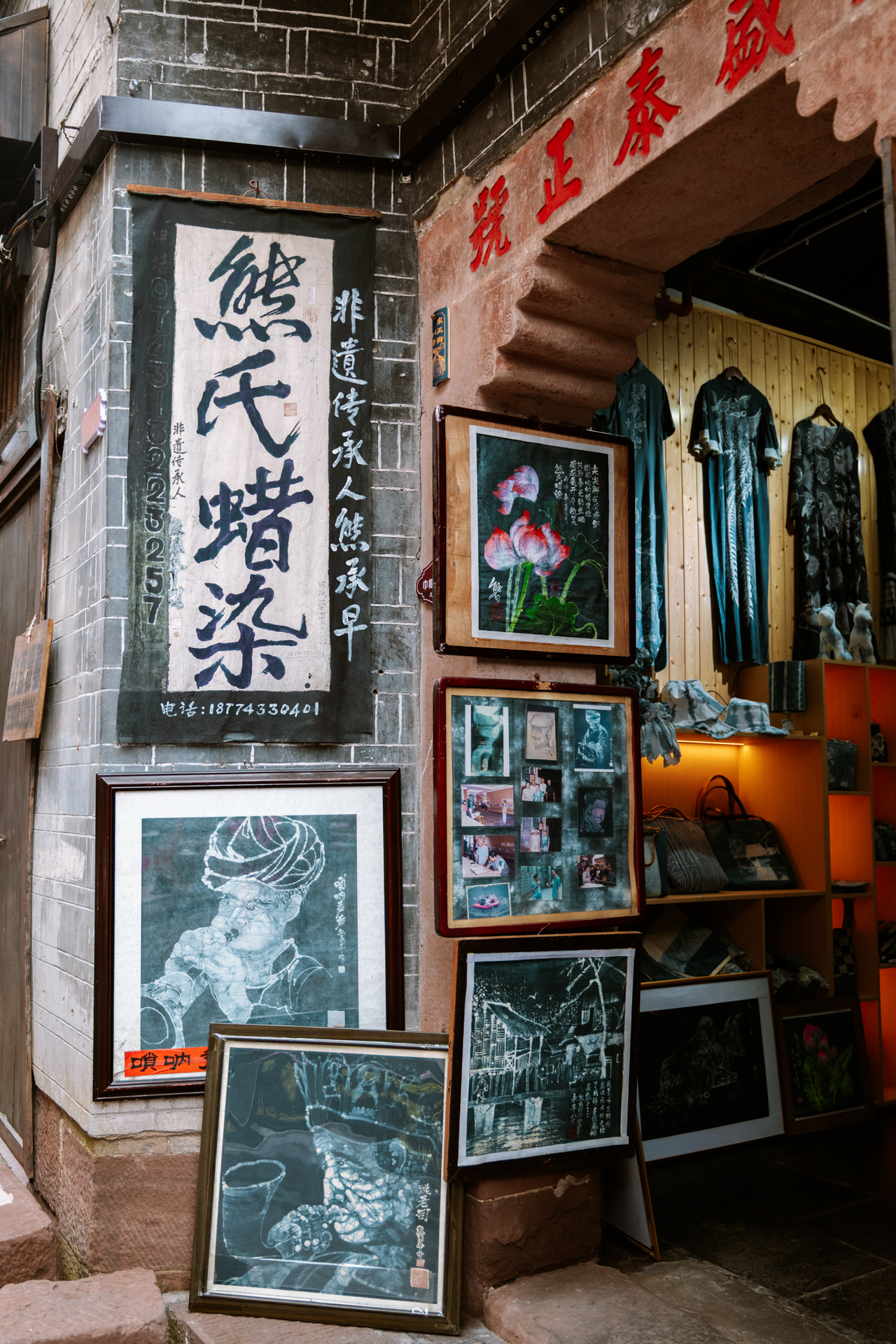
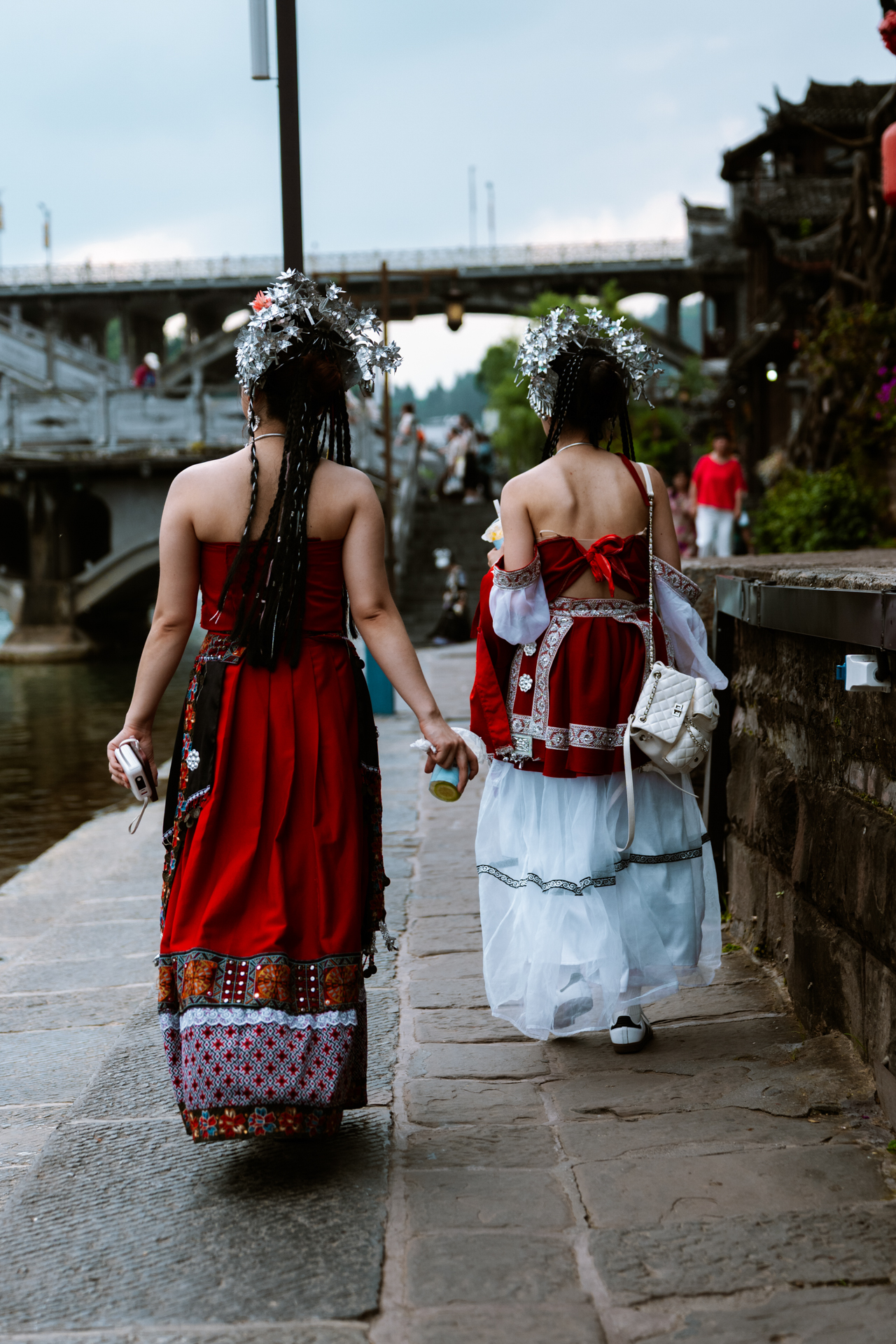
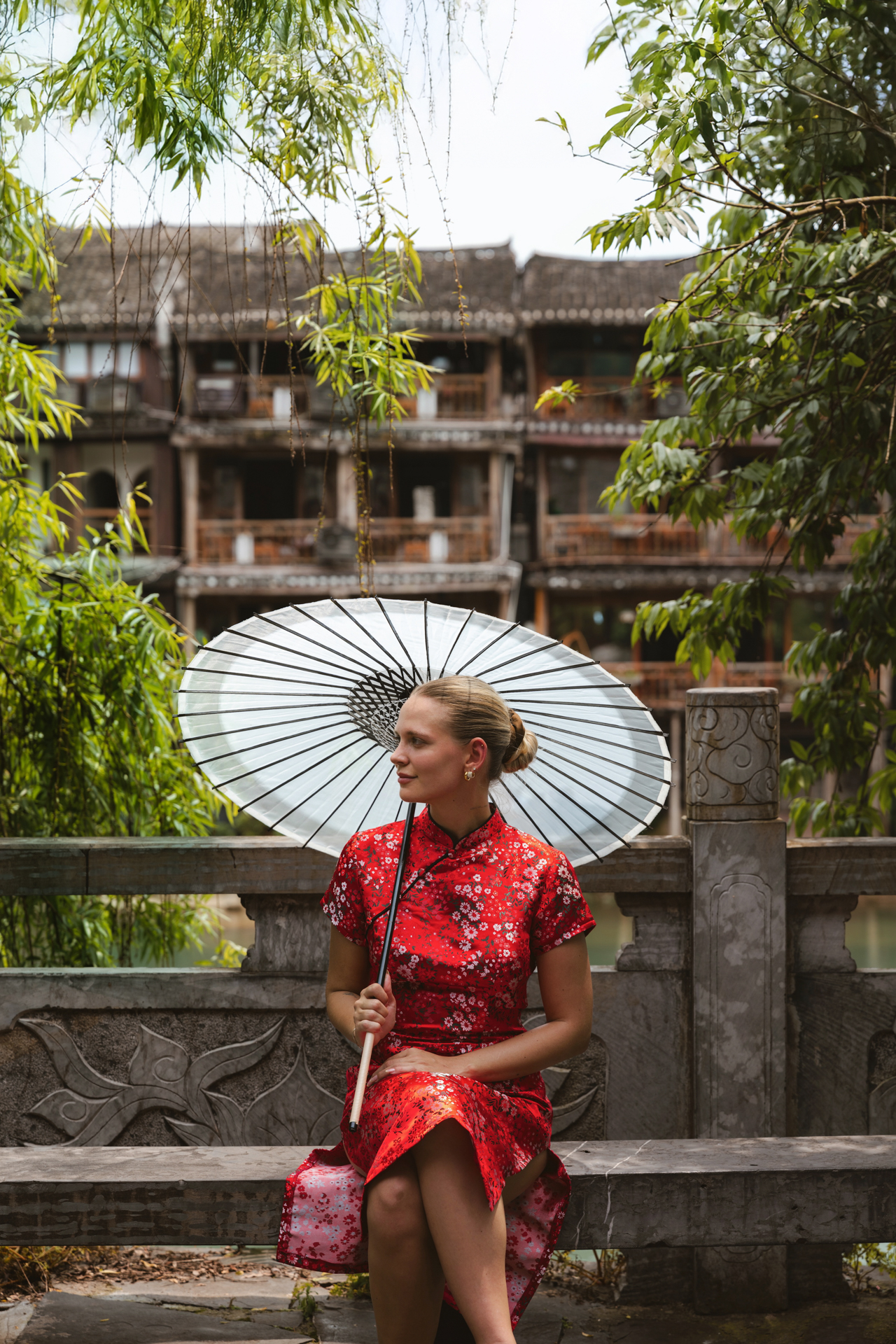
What gives Fenghuang its character though is the people. This is Miao and Tujia country, and you feel it everywhere, in the embroidery, the heavy silver jewellery, the sour and spicy food, and the music drifting out of open doorways. Parts of it are clearly put on for visitors now, but the roots underneath are real.

The Miao and Tujia are two distinct ethnic minority groups in China. They live closely together in mountainous regions like western Hunan and Chongqing, sharing rich traditions, unique stilt-house architecture, and autonomous prefectures famous for scenic ancient towns.
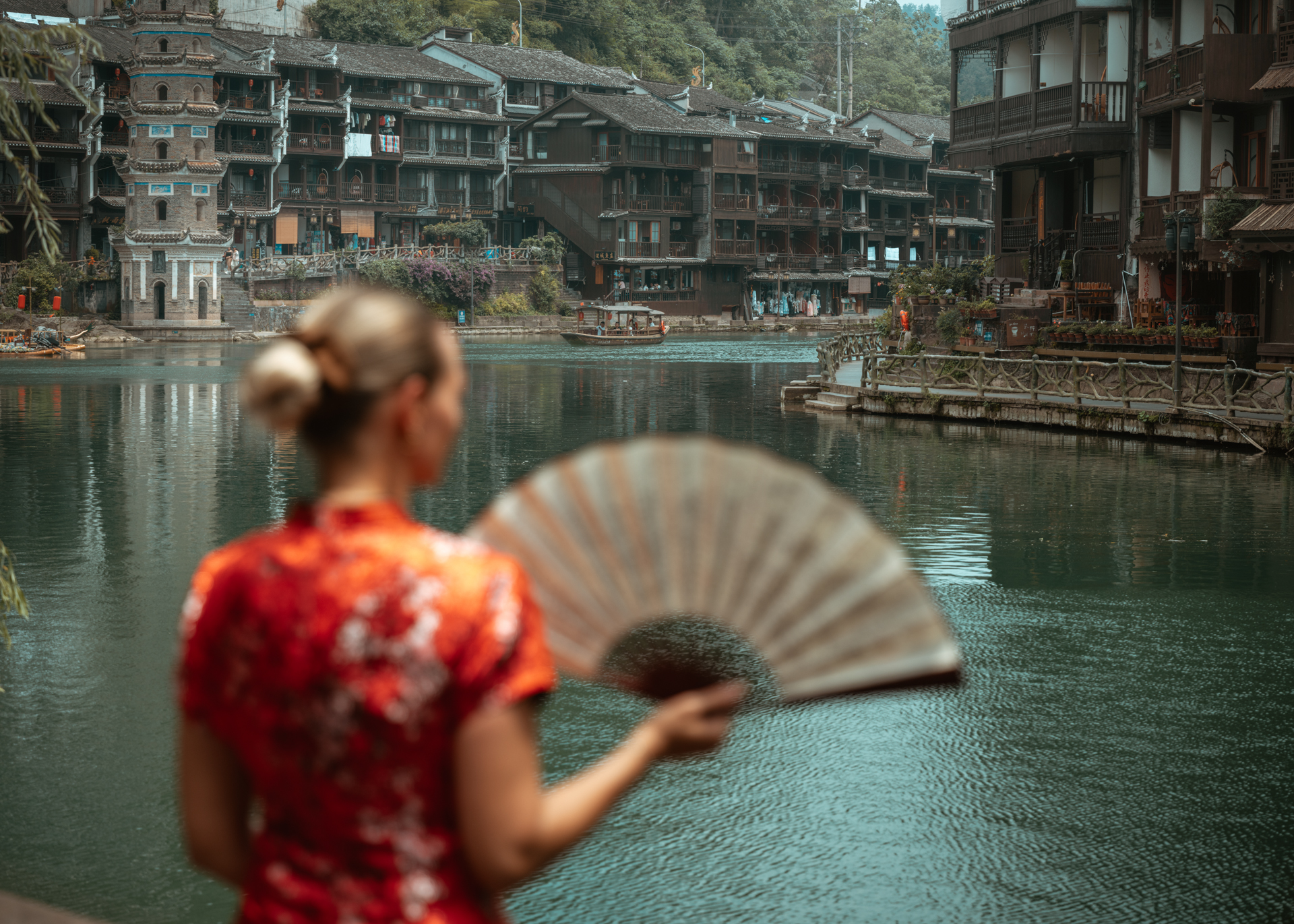
Fenghuang Ancient Town Overview
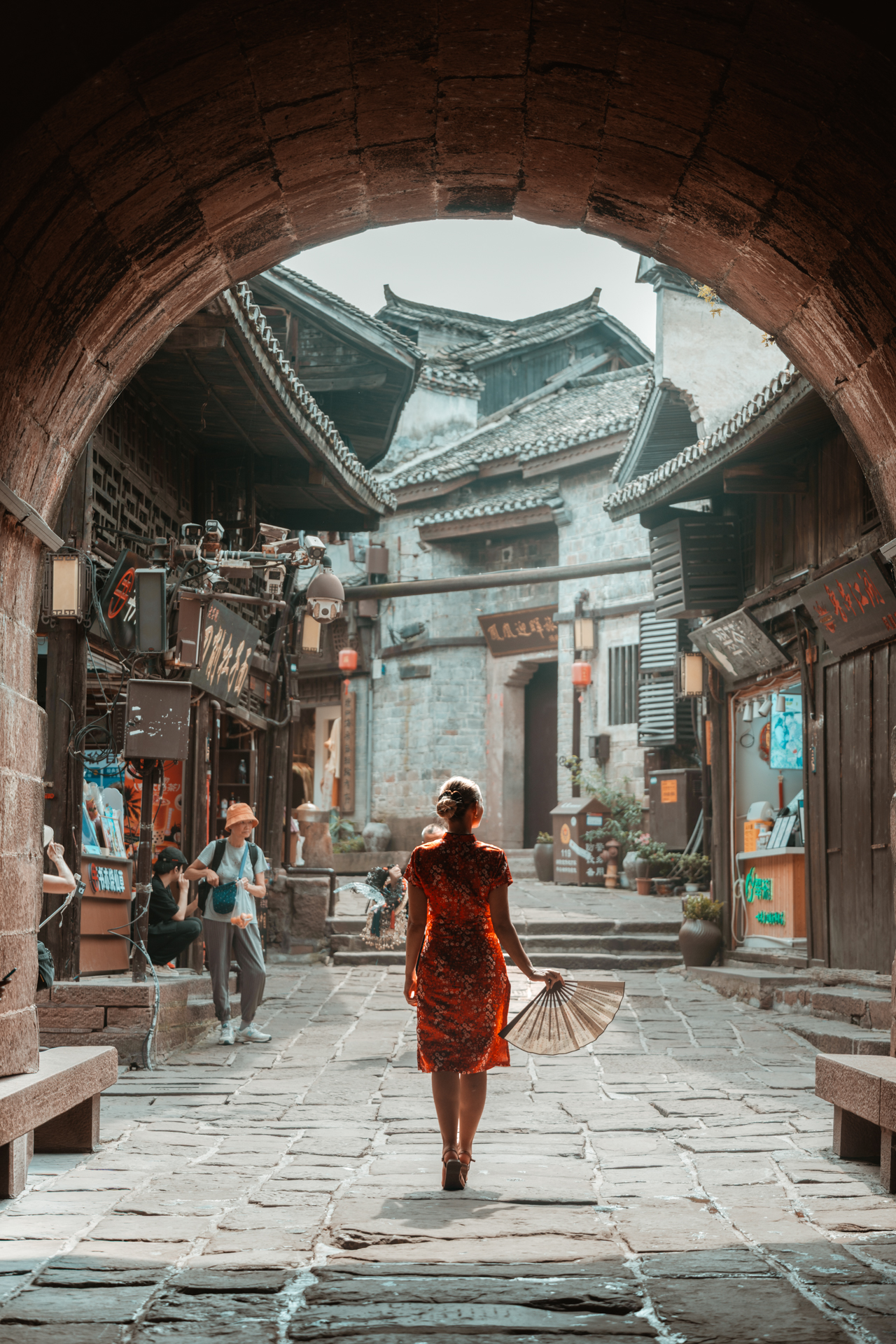
What Not to Miss
Best Things to Do in Fenghuang
You don't need a list to enjoy Fenghuang Ancient Town. Honestly, the best thing to do here is put your phone away and get lost in the lanes for a few hours. But there are a few things I would not skip, and most of them cost nothing at all.
Two Towns in One Day
Fenghuang During the Day vs at Night
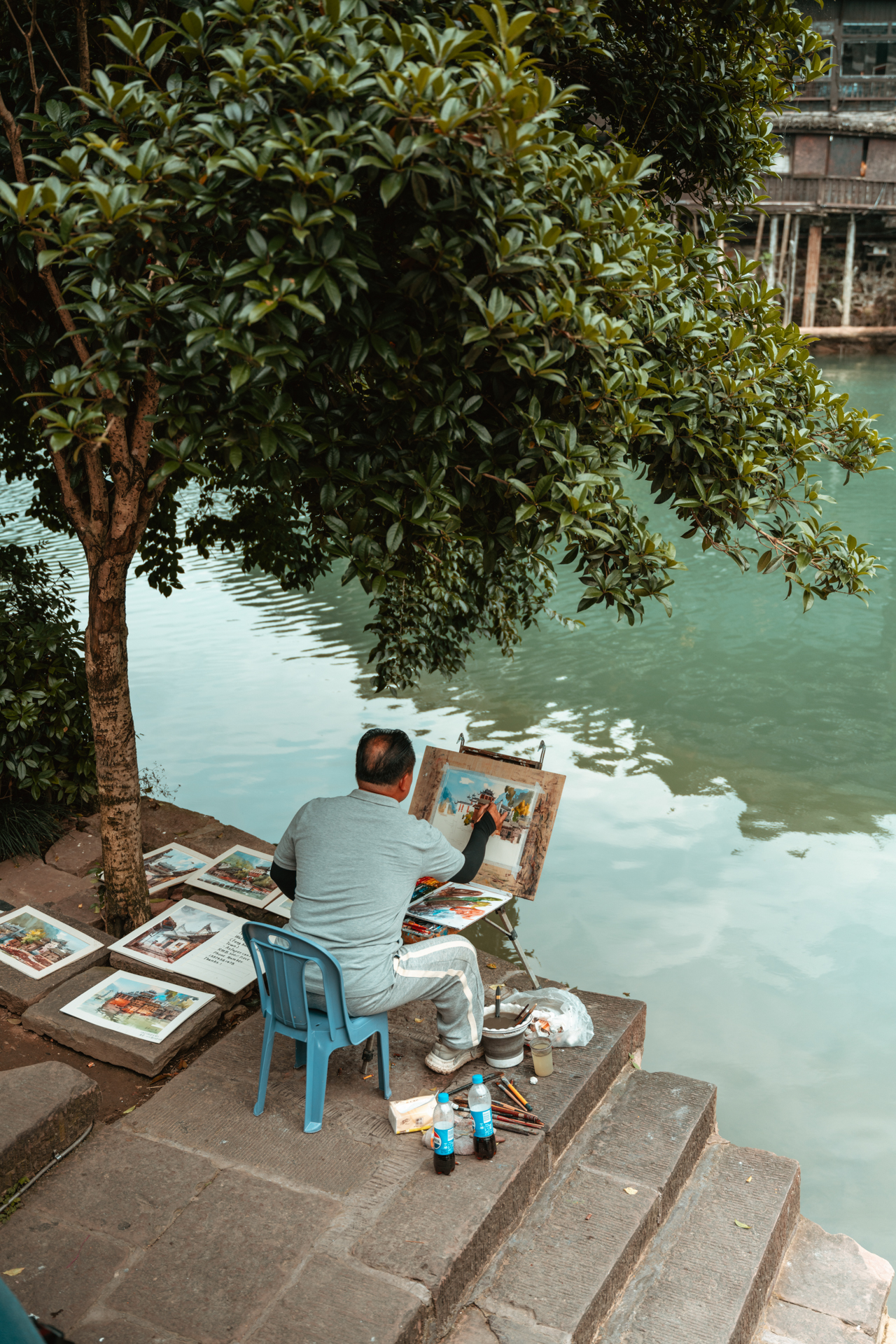
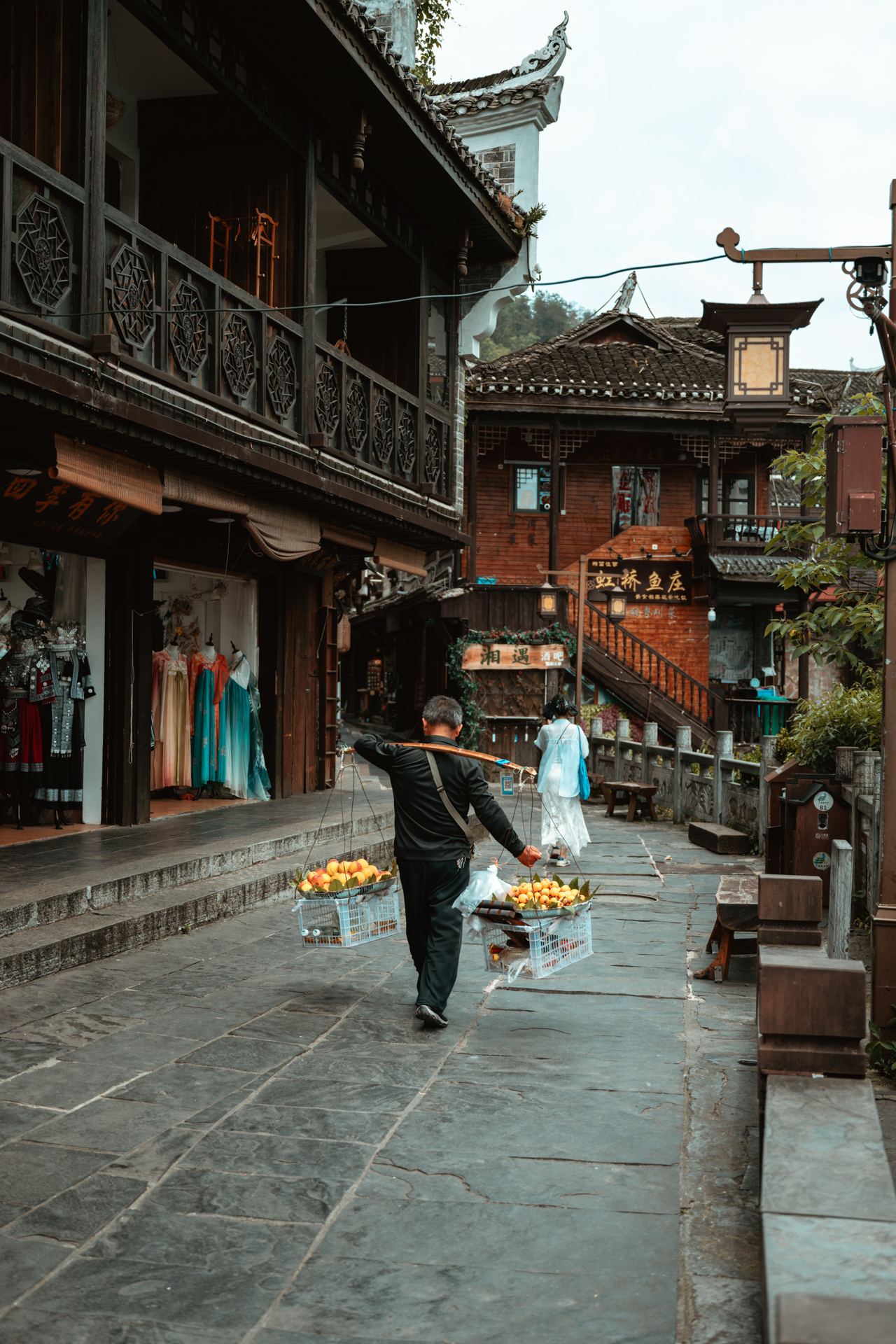
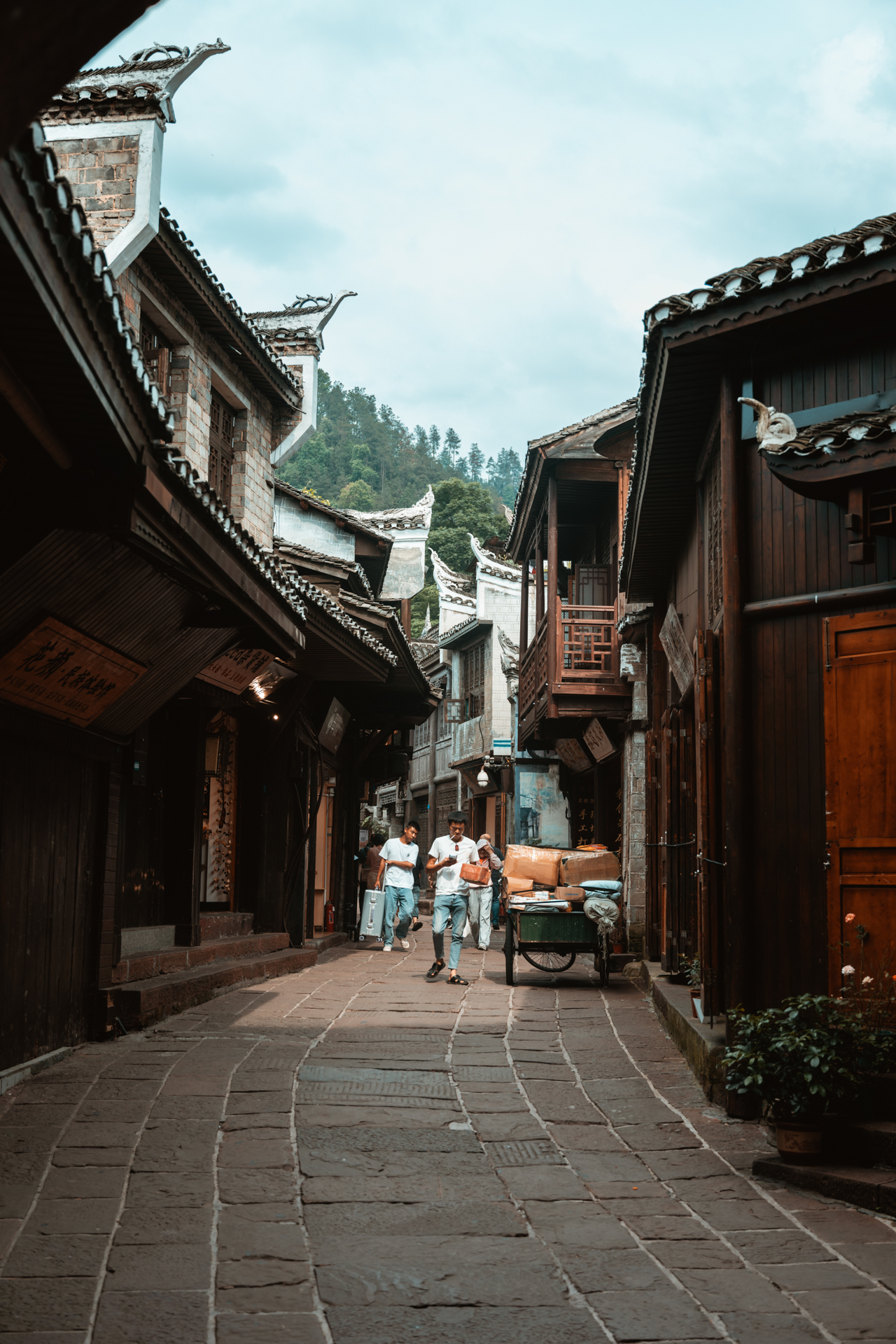
During the day, Fenghuang is a working old town. You get the architecture at its most honest, the dark timber of the stilt houses against the green hills, laundry strung between windows, people scrubbing chillies at the water’s edge, tour groups following a flag through the lanes. Mornings are the best time to explore. Before around 9 a.m., the streets are still really quiet and empty. Actually, even during the entire day, it's still SO much quieter than during the night.
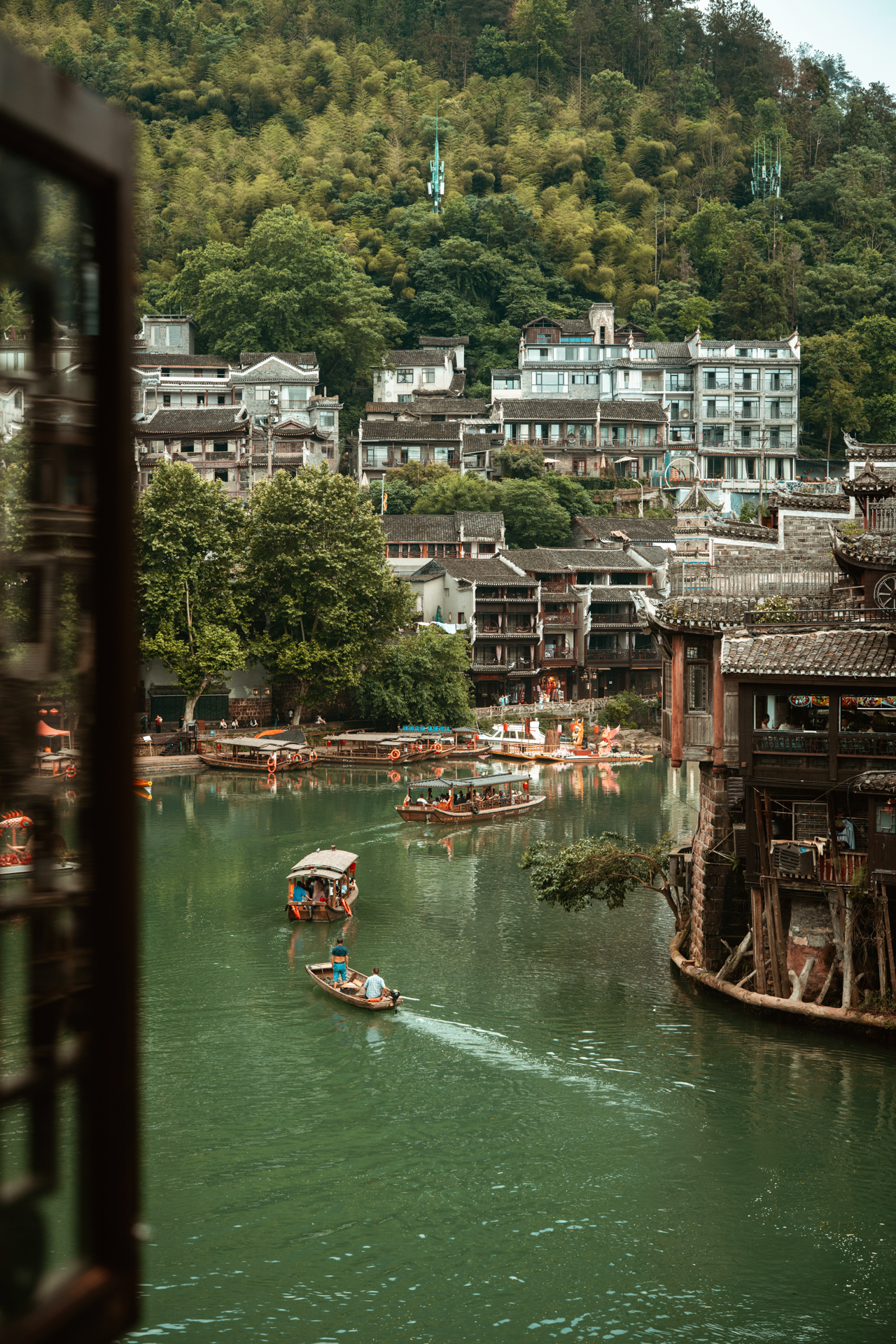
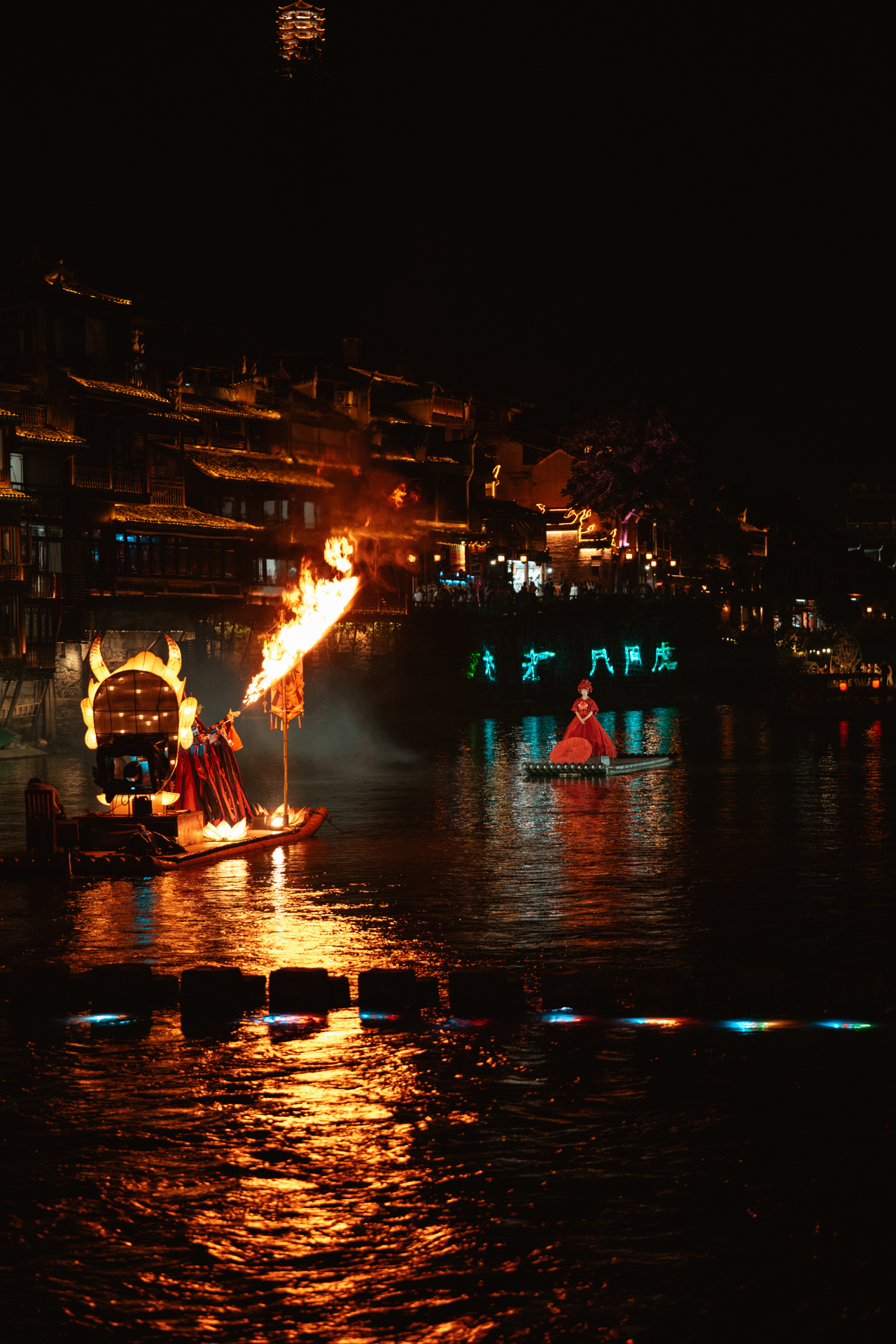
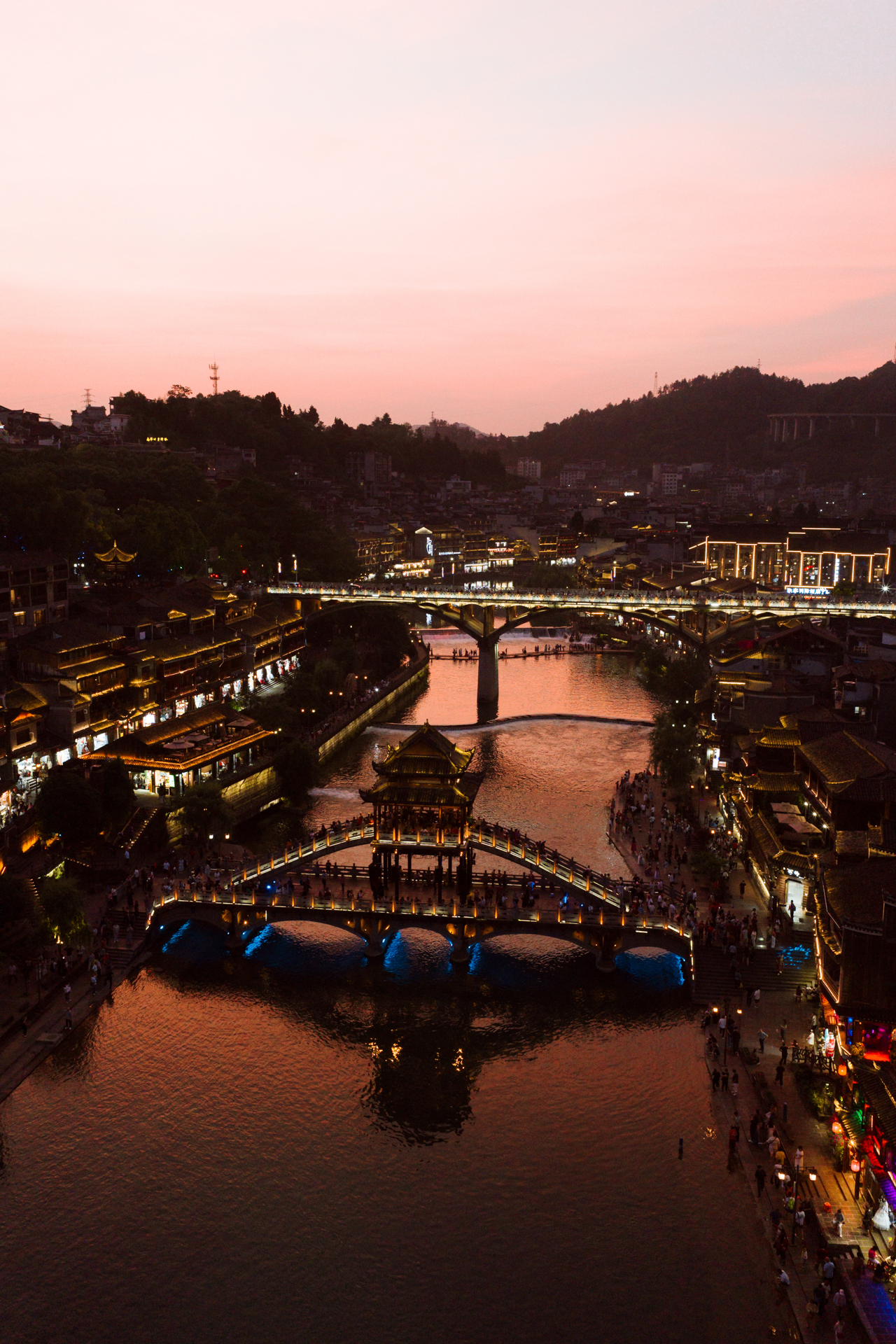
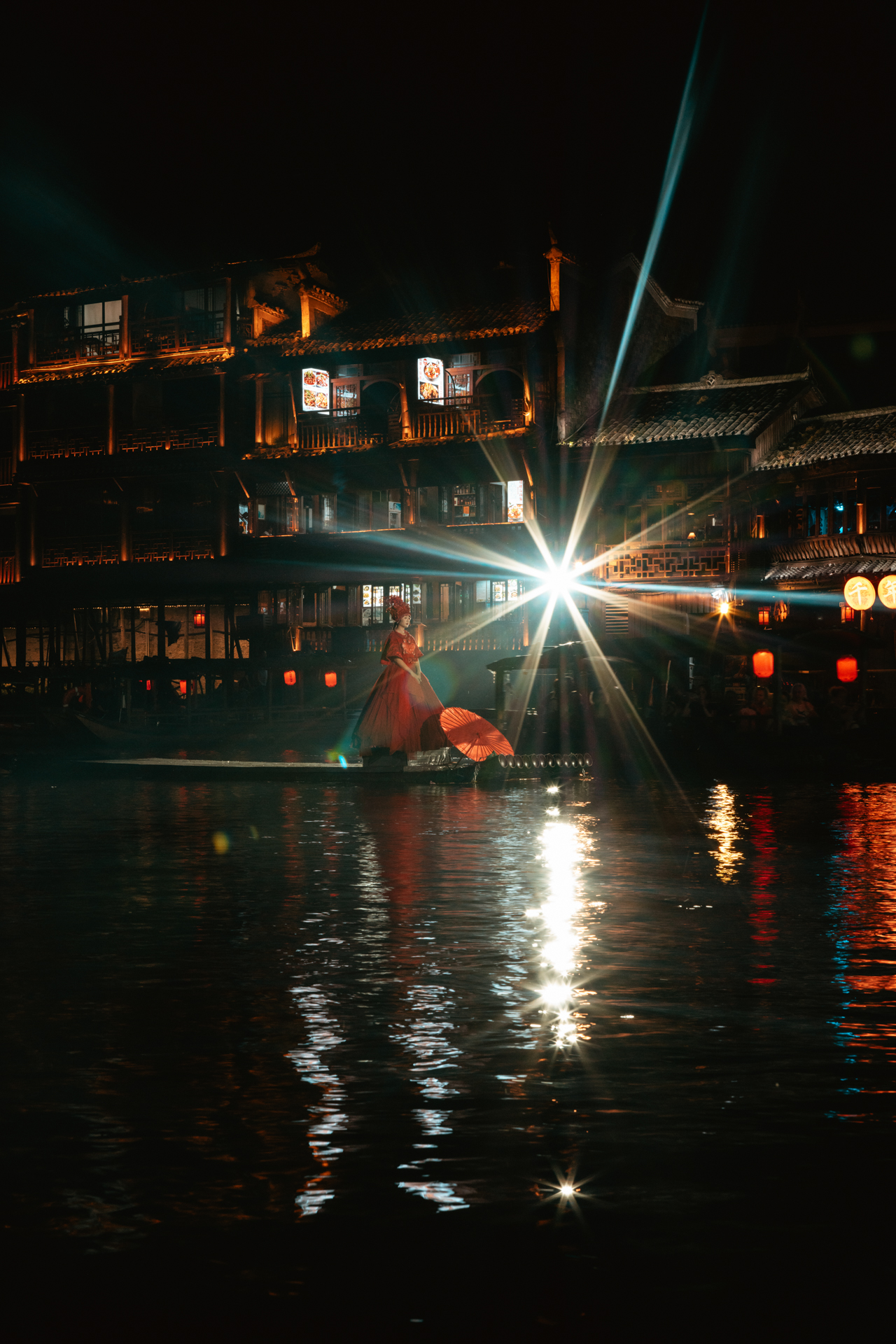
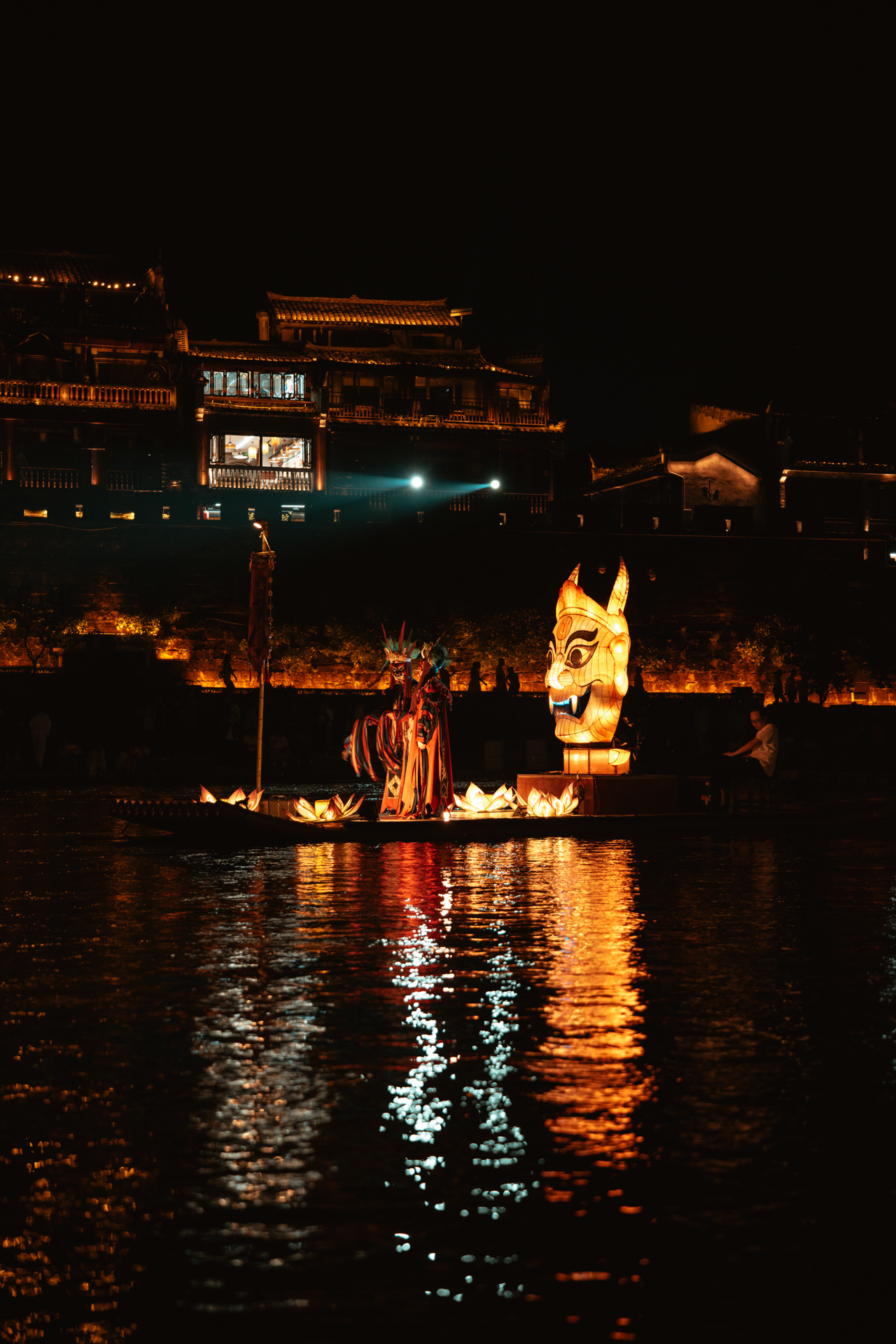
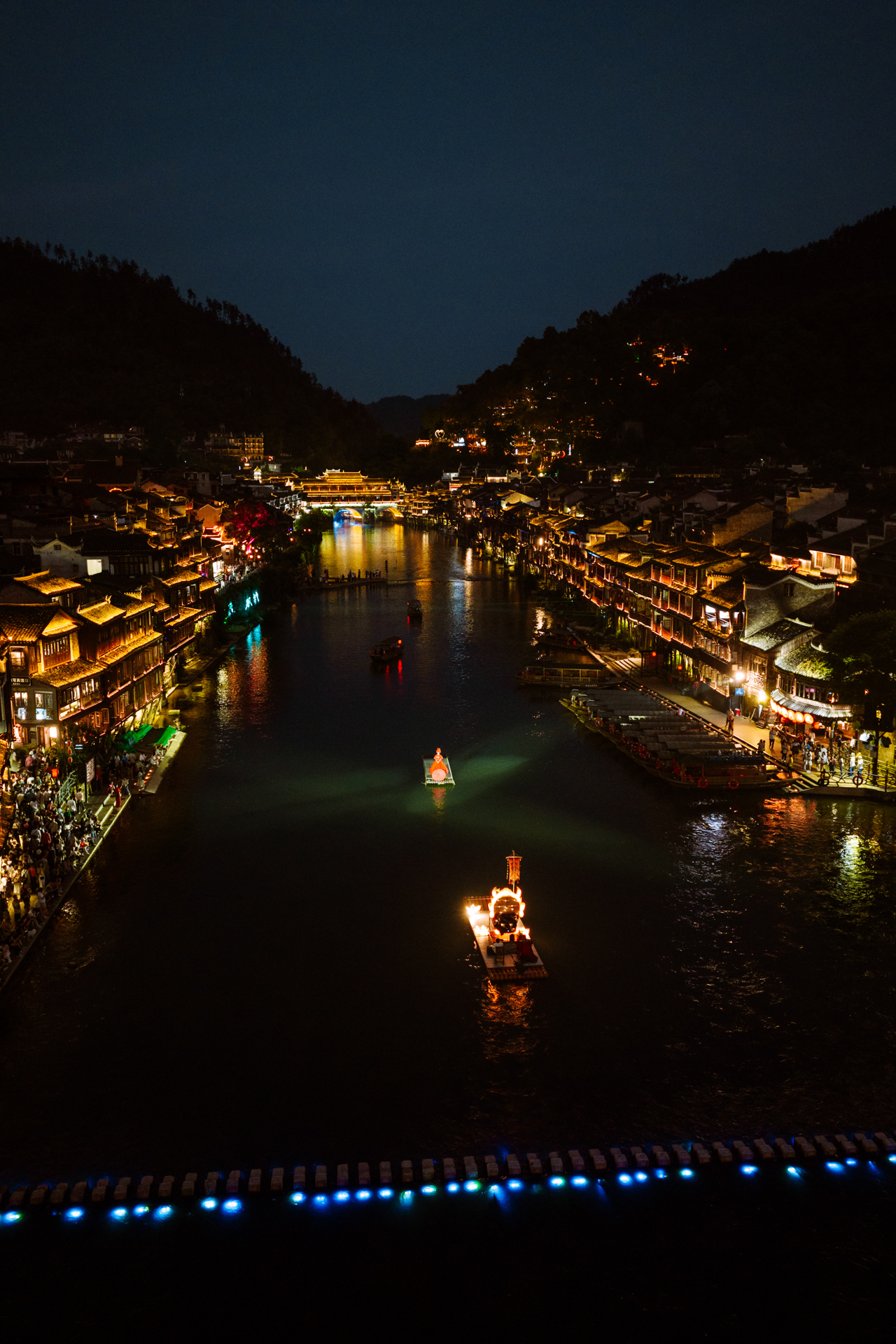
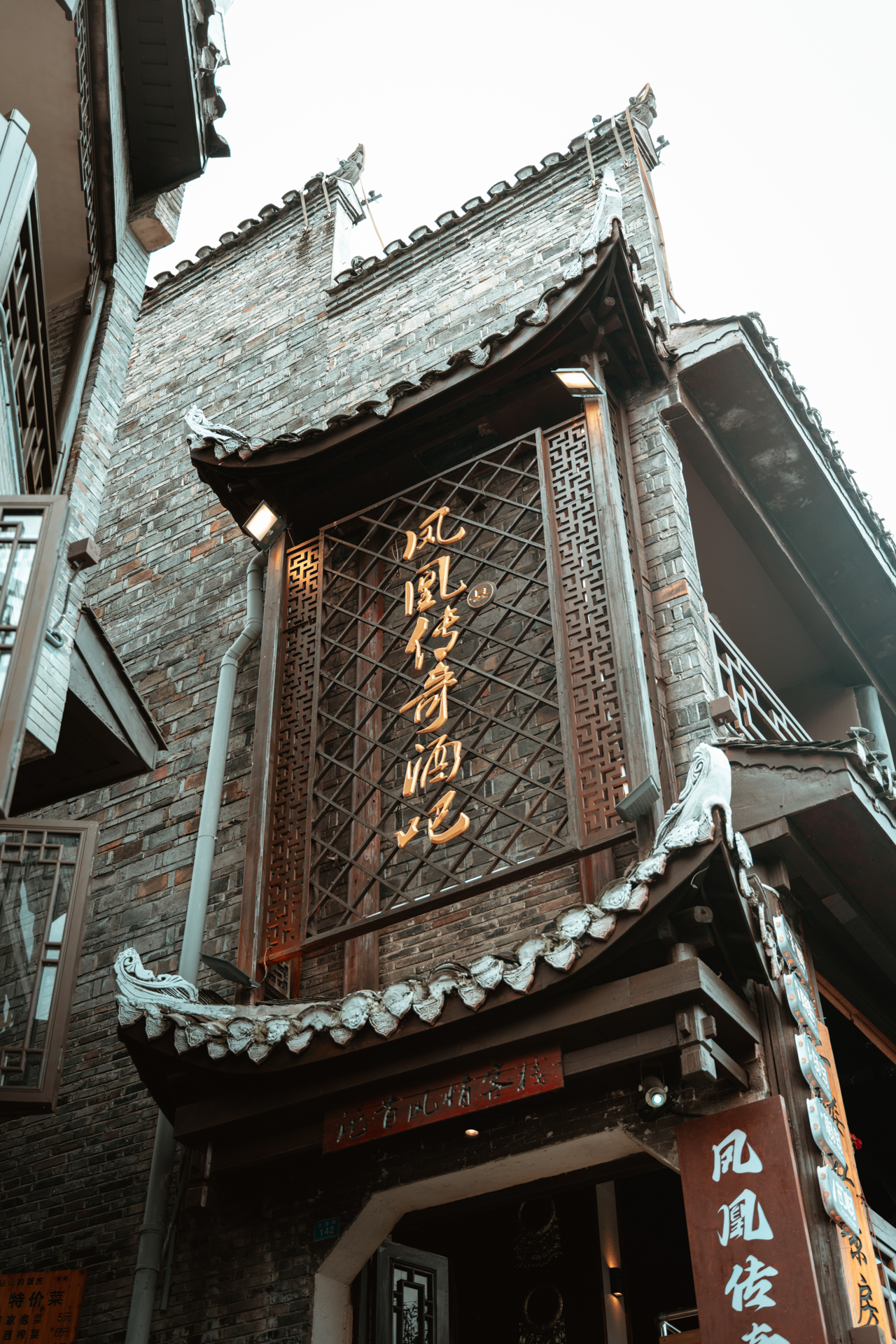
Then the sun goes down and the whole place changes. The lights along the river switch on and every stilt house, bridge and pagoda starts glowing. The Tuojiang turns into a mirror, the boats fill with lanterns, music spills out of the bar street on the north bank, and the town goes from quiet, empty and pretty to properly crowded and cinematic. It's loud, a little chaotic, and completely different from the town you walked through six hours earlier.
During the day, you’ll see silver headdresses and traditional costumes displayed in shop windows, and once it gets dark, you’ll see plenty of photoshoots happening around town with people dressed in them.

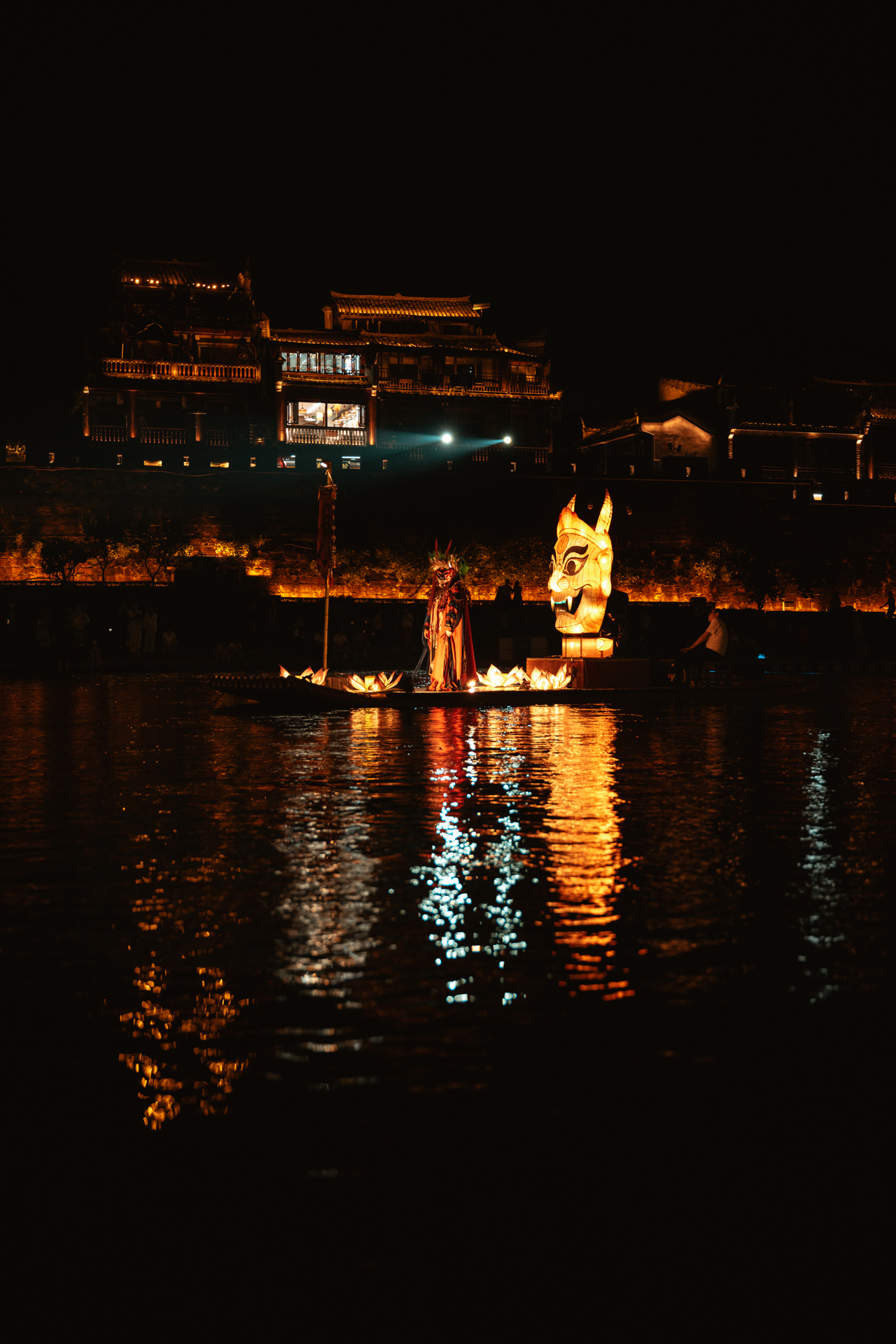
Fenghuang’s night performance on the Tuojiang River is one of the town’s most atmospheric sights. On the dark water, a small raft drifts past glowing red lanterns, often carrying a woman in a flowing red dress. The scene feels almost theatrical and is meant to create a romantic, dreamlike mood that adds to Fenghuang’s magical nighttime charm. The performance usually takes place every evening, weather and conditions permitting.
Don't just visit Fenghuang as a day trip. Stay until after dark, because the town is at its most impressive at night. Head to Nanhua Bridge or the upper level of Snow Bridge about 20 minutes before the lights come on, claim your spot, and watch the whole town switch on at once. It's the best free show in Hunan.
Trains, Shuttles and Cobbled Lanes
Getting Around Fenghuang
Inside the old town you walk, and that is the whole answer. Cars are not allowed in the historic core, the lanes are narrow flagstone and cobble. Everything you actually came for sits within about 20 minutes on foot, so wear proper shoes and forget about transport while you're here.
A word of warning about luggage. Those pretty uneven stone streets are tricky with a suitcase, especially if your guesthouse is deep inside the old town, and drivers can only drop you at the edge of the pedestrian zone. Pack light if you can, or at least now you are prepared.
For anything outside the old town, the train station, a day trip, an early departure, use DiDi, which is China’s version of Uber and works in English. Regular taxis are around too, but agree the fare first. Both are cheap by European standards.
How to Get to Fenghuang
This is the question I get asked most about Fenghuang, and the good news is that it got a lot easier in recent years. The high speed line through western Hunan opened in late 2021.
Planning Your Stay
How Many Days in Fenghuang
One night and two days is the sweet spot for most people. That gives you the day to wander in and find your way around, sunset from one of the bridges, the town lit up at night with a boat ride if you fancy it, and then a slow, quiet morning the next day before your train if you want to wake up early. Those three completely different moods are the point of staying over.
Pick Your Side of the River
Where to Stay in Fenghuang
Fenghuang has hundreds of guesthouses and the choice is genuinely overwhelming, so forget the hotel names for a second and pick your area first. Stay inside or right next to the old town, within walking distance of the Tuojiang River. That is the whole reason you came, and being able to step out at six in the morning or eleven at night without organising transport is worth paying a bit more for.
The north bank is the lively side with the bar street, which is fun if you want to be in the middle of it and miserable if you are a light sleeper, because the music runs past midnight. The south bank and the lanes one row back from the water are noticeably quieter and still only a two minute walk from everything. Here are a few recommendations:
Where to Eat and Drink
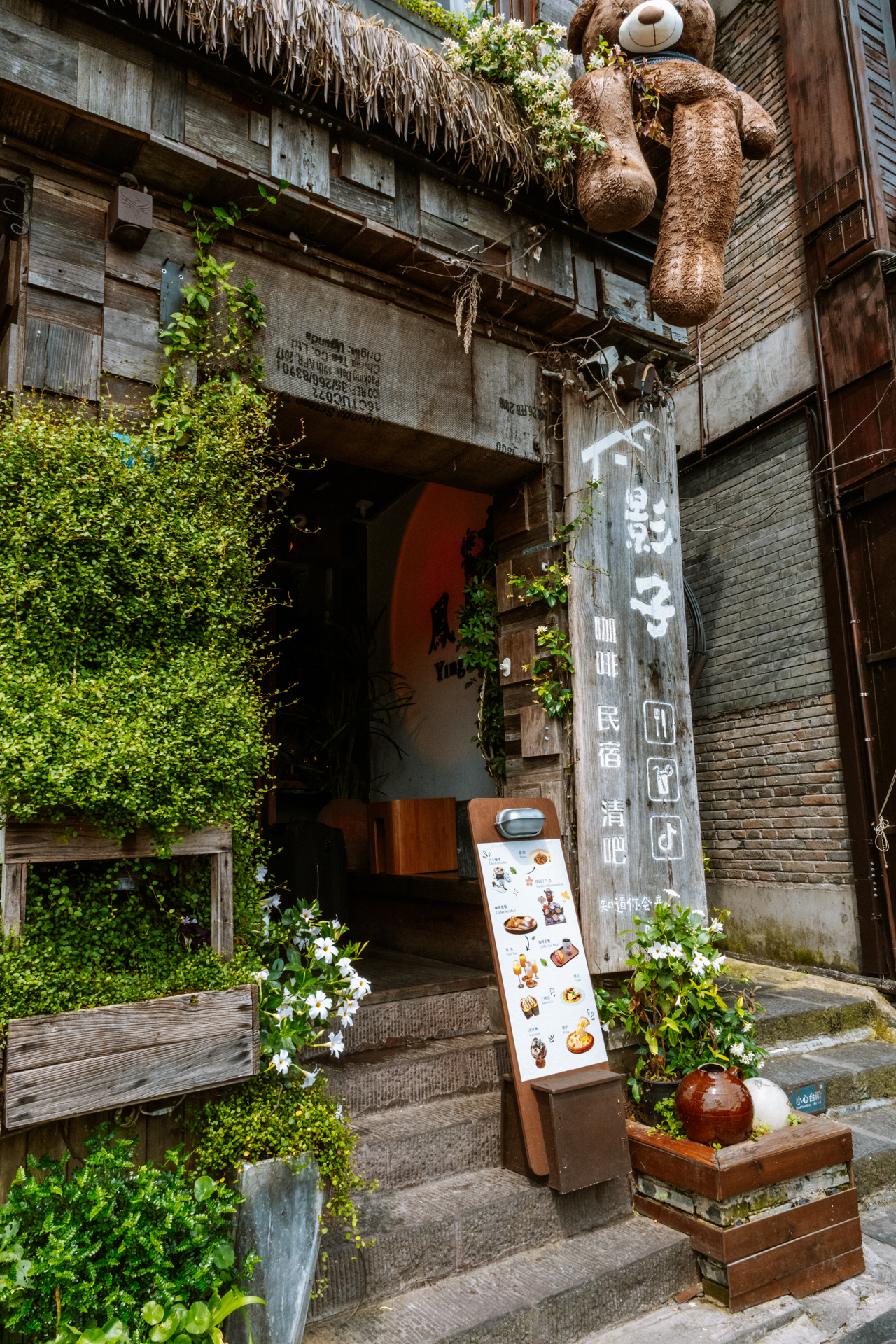
Best Cafes and Restaurants
Xiangxi food is sour, smoky and properly spicy! Hunan does not do mild, so if chilli is not your thing, say bu yao tai la, which means not too spicy.
Ginger candy (Jiang Tang) is one of Fenghuang’s signature souvenirs. You’ll pass shops where it’s hand-pulled on wooden hooks right in the window, and free samples are part of the experience.
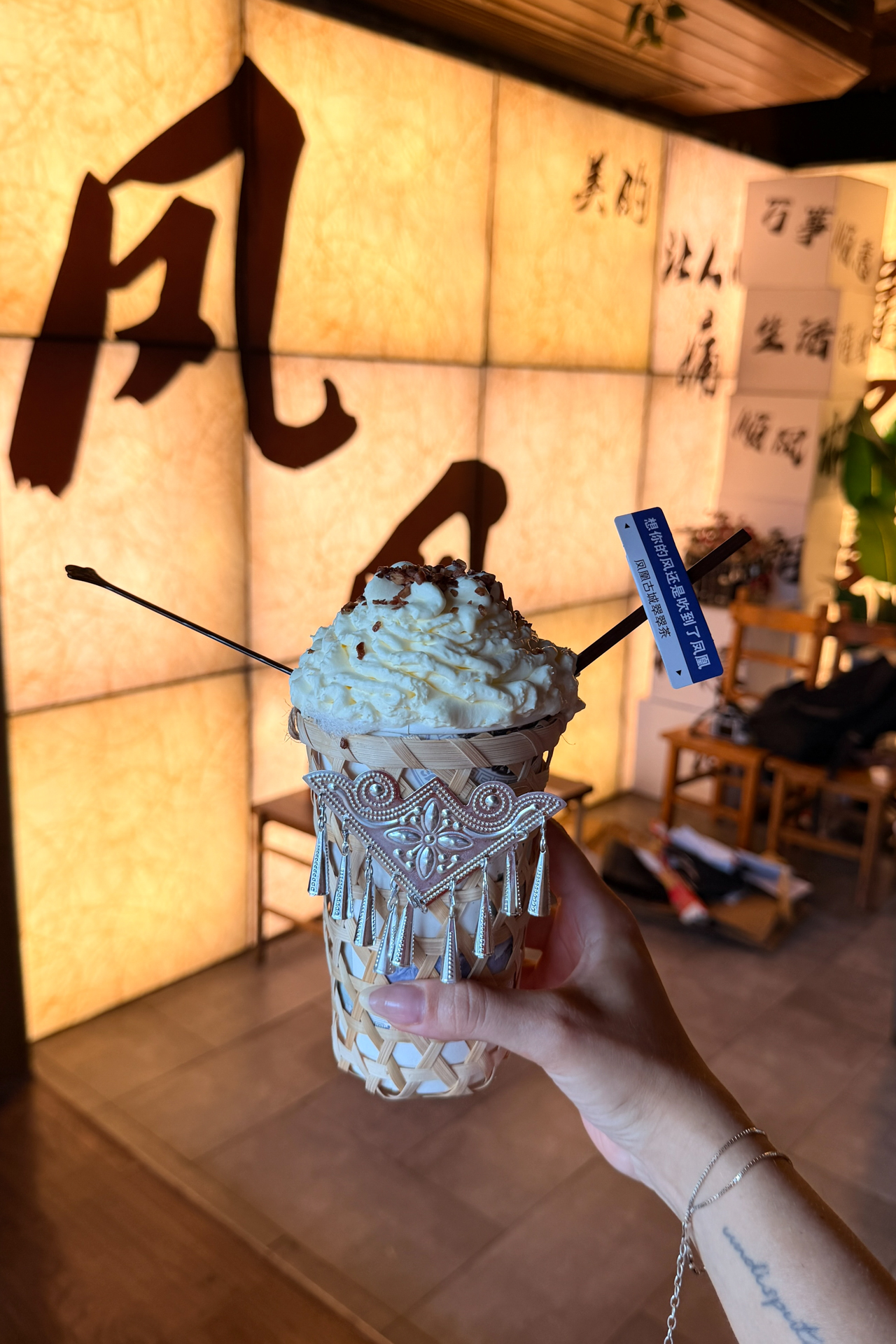 Xicui Coffee
Good to Know Before You Go
Fenghuang Travel Tips
Seasons and Crowds
Best Time to Visit Fenghuang
The best time to visit Fenghuang Ancient Town is spring and autumn, so roughly April to June and September into early November. You get comfortable temperatures around 15 to 25 degrees, green hills, and the river at its prettiest without the worst of the crowds.
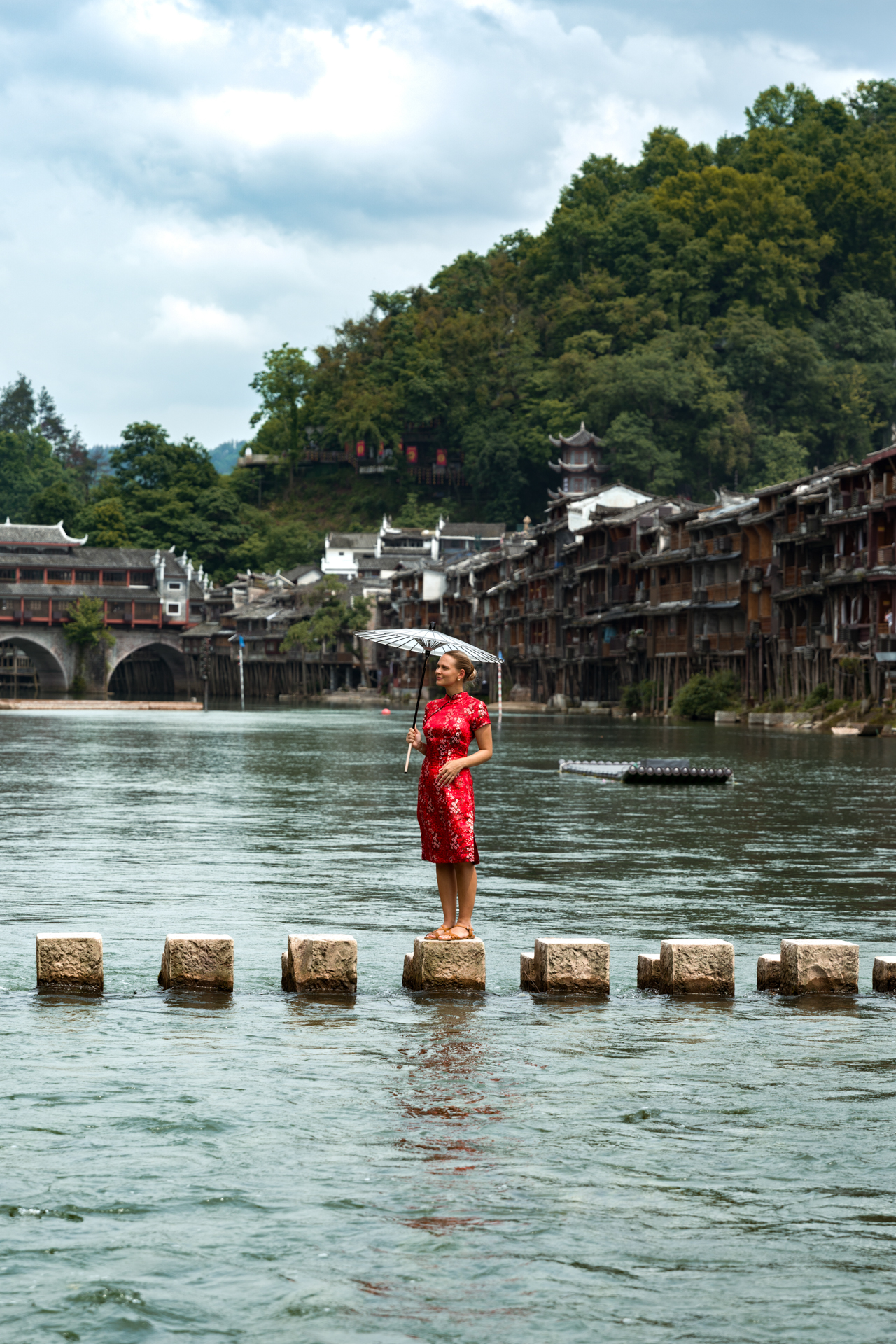
Summer, from July to August, is hot, very humid and busy, because it's Chinese school holidays (yes 2 full months!). It's also the rainy season, and heavy rain can swell the Tuojiang enough to close the stepping stones and pause the boats.
Winter is the quiet season, cold and often misty, which is atmospheric in photos and genuinely chilly in real life. Bring layers, because the old buildings are not heated the way you might hope.
Now the part that matters far more in China than in Europe: public holidays. During these dates, millions of people travel across the country, so places like Fenghuang can become extremely crowded. Trains and hotels also book up quickly, so it’s worth checking the holiday calendar before planning your trip.
Chinese Public Holidays to Avoid
I explored Hunan in May, when the weather was warm and humid, the landscapes were beautifully green, and the crowds were still manageable compared to the peak summer months.
Loved it? Pin it, Share it!
Inspire Others to Travel to Fenghuang
Keep Exploring
More Travel Guides from China














THE TRAVEL

Let’s stay connected!
Get inspired, helpful tips and exclusive updates straight to your inbox. Subscribe to join a community of explorers.